






The 30-Day No-Spend Challenge That Saved Me Over $2,000

The 30-Day No-Spend Challenge That Saved Me Over $2,000

I started the 30-day no-spend challenge because my money was disappearing too fast.

I was not buying luxury items every week. I was not making one huge mistake. The problem was smaller and harder to notice. It was coffee, takeout, online shopping, delivery fees, extra groceries, beauty items, and random “small” purchases.

At the end of every month, I kept asking the same question: “Where did my money go?” So I decided to try a no-spend month. For 30 days, I would only spend money on real needs. Everything else had to wait.

A no-spend challenge usually means you pause nonessential spending and only pay for necessities like rent, bills, groceries, transport, and health needs. SoFi and Fidelity both describe it as a simple spending reset where you decide what counts as essential before the challenge starts. 

Why I Needed A Budget Reset

Before the challenge, I thought I was careful with money. But my bank statement told a different story.

I was spending because I was tired. I was spending because I was bored. Sometimes, I was spending because I felt like I deserved a reward after a hard day. The challenge forced me to face one truth: my problem was not income only. My problem was money habits.

That realization changed everything.

Johnson Financial Group notes that a no-spend month can help people reduce stress, simplify spending, and build better financial habits. That was exactly what I wanted. I did not want another complicated budget. I wanted a clear rule.

For 30 days, the rule was simple: needs are allowed, wants can wait.

My No-Spend Challenge Rules

I wrote the rules before day one. This helped me avoid emotional decisions later.

I allowed myself to spend on:

  • Rent or mortgage
  • Utility bills
  • Basic groceries
  • Fuel or transport
  • Medicine and health needs
  • Work-related essentials
  • Real emergencies

I did not allow myself to spend on:

  • Takeout
  • Coffee shop drinks
  • New clothes
  • Beauty products
  • Home decor
  • Amazon orders
  • Paid entertainment
  • Random sale items
  • Extra subscriptions

I also added one important rule. If something felt urgent, I had to wait 24 hours before buying it. Most of the time, the urge disappeared.

Gretchen Rubin also recommends setting clear ground rules before a no-spend month, because unclear rules make it easier to quit. 

Where I Saved The Most Money

The savings did not come from one big sacrifice. They came from many small changes.

I cooked at home. I stopped ordering food. I used groceries already in the kitchen. I cancelled unused subscriptions. I deleted shopping apps. I also stopped browsing stores “just to look.” That was a big lesson. Looking often leads to buying.

Here is how the savings added up:


Spending Category Before Challenge During Challenge Saved
Takeout and delivery $520 $80 $440
Coffee and snacks $180 $25 $155
Online shopping $600 $0 $600
Clothing and beauty $350 $0 $350
Entertainment $260 $30 $230
Subscriptions $140 $60 $80
Extra groceries and food waste $300 $100 $200
Home items and impulse buys $250 $0 $250
Total Saved $2,31


Seeing the numbers made me feel motivated. I was not depriving myself. I was taking back control.

The First Week Was The Hardest

The first week tested me. I wanted to order dinner after a long day. I wanted to buy a shirt I saw online. I wanted a coffee because it felt like comfort.

That was when I realized how often I used spending as a mood booster.

So I replaced those habits with free options. I made coffee at home. I cooked simple meals. I watched movies I already had access to. I went for walks. I cleaned my room. I used things I had already bought.

The Business Insider writer who tried a 30-day spending freeze also noticed late-night impulse shopping and small online purchases as key weak spots. Her solution included pausing before buying and using money more intentionally. 

That helped me too. I stopped treating every want like a need.

Meal Planning Saved My Challenge

Food was the biggest reason I usually overspent. I often bought groceries and still ordered food. That meant I wasted money twice. First on groceries. Then on delivery.

During the challenge, I made a simple meal plan. I did not cook fancy meals. I made easy food that worked. I used eggs, rice, chicken, pasta, lentils, soup, vegetables, fruit, and leftovers. I also planned quick meals for tired days.

This one habit saved me hundreds of dollars. The lesson was simple: when food is already planned, takeout becomes easier to avoid.

What The Challenge Taught Me About Money

The 30-day savings challenge taught me that spending is often emotional.

I bought things when I felt stressed. I added items to my cart when I felt bored. I ordered food when I felt tired. I spent money because it gave me a quick feeling of control. But that feeling never lasted.

Saving money felt better. Watching my balance grow felt better. Paying down bills felt better. Building an emergency fund felt better. By the end of the month, I did not feel restricted. I felt lighter.

What I Did With The $2,305

The most important step came after the money was saved. I did not leave it sitting in my checking account. That would make it too easy to spend later.

I moved the money into three places:

  • Emergency fund
  • Debt payment
  • Future savings goal

This made the challenge feel real. The money had a purpose. It was no longer “extra cash.” It became progress.

A no-spend challenge works best when the saved money goes somewhere meaningful. That could be debt payoff, emergency savings, travel, investing, or a large future purchase.

How You Can Start Your Own 30-Day No-Spend Challenge

Start with a clear reason. Do you want to save $500? Pay off a card? Build an emergency fund? Stop impulse buying?

Then write your rules. Keep them simple. Decide what counts as essential. Decide what is banned. Also decide what exceptions are allowed. Fidelity notes that a no-buy challenge can include planned exceptions, such as important events or unexpected expenses. 

Next, remove temptation. Delete shopping apps. Unsubscribe from store emails. Avoid malls. Remove saved cards from websites. Keep a “buy later” list.

Most importantly, track your progress. Every dollar you do not spend should be counted. That number will keep you motivated.

Final Thoughts

The 30-day no-spend challenge saved me over $2,000, but the money was only part of the reward. The bigger win was awareness.

I learned where my money was going. I learned which habits were hurting me. I learned that I could enjoy life without buying something every day.

This challenge is not about being cheap. It is about being honest. For 30 days, pause the noise. Stop the leaks. Use what you already have. Spend only on what matters.

You may finish the month with more money, less stress, and a stronger sense of control.

FAQs

What Is A 30-Day No-Spend Challenge?

A 30-day no-spend challenge is a savings challenge where you only spend money on essentials. You pause nonessential spending like takeout, shopping, paid entertainment, and impulse purchases.

Can I Still Buy Groceries During A No-Spend Month?

Yes. Groceries are allowed because food is essential. The goal is to avoid food waste, delivery orders, expensive snacks, and unplanned grocery spending.

How Much Money Can I Save With A No-Spend Challenge?

It depends on your normal spending habits. Some people may save a few hundred dollars. Others may save over $2,000 by cutting takeout, shopping, subscriptions, entertainment, and impulse buys.


Post Disclaimer

The information provided on Financepdia.com is for educational and informational purposes only and should not be considered financial, investment, or trading advice. Cryptocurrency and financial markets are highly volatile and involve significant risk. Readers should conduct their own research (DYOR) and consult with a qualified financial advisor before making any investment decisions. Financepdia.com and its authors are not responsible for any financial losses resulting from actions taken based on the information provided on this website.
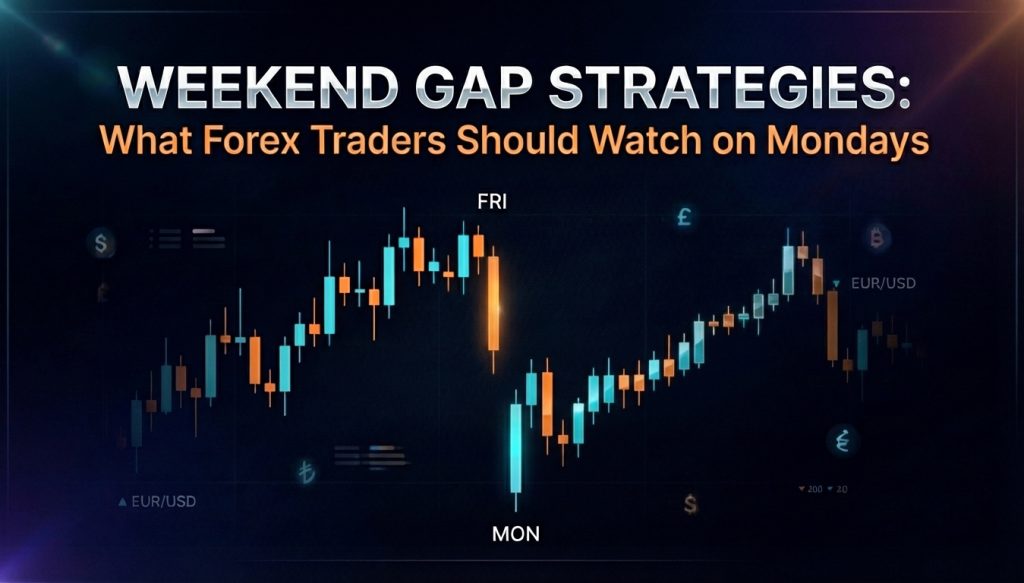

Weekend Gap Strategies: What Forex Traders Should Watch on Mondays

Weekend Gap Strategies: What Forex Traders Should Watch on Mondays

Can a calm weekend in crypto hide the kind of Monday move that catches a forex trader off guard? 

That question matters more than many new traders think. A quiet chart on Friday can turn into a sharp jump by the Monday open when fresh orders hit the market. For a crypto focused reader, the lesson feels familiar. News never really stops, and price can react fast when liquidity comes back.

In forex gap trading, the main weekly gap appears between the Friday close and the Monday open because retail trading pauses over the weekend while global events keep moving. A gap can open higher or lower than Friday’s last traded price. Also, that move can trigger fear, fast entries, or bad exits if the trader has no plan.

What a Weekend Gap Really Says

A weekend gap is not random noise. It often reflects new information that hit the market while forex trading was closed. That can include political news, central bank talk, election results, conflict headlines, or a sudden shift in market mood. So, the first job on Monday is not to chase price. The first job is to read what the gap is saying.

A small gap in a quiet pair may mean little. A large gap in EUR/USD, GBP/USD, or USD/JPY can point to strong order flow at the open. However, size alone is not enough. The trader still needs to check whether price starts to pull back toward Friday’s close or keeps moving in the gap direction.

That difference matters. Some Monday gaps move back toward the prior close, which traders often call a gap fill. Meanwhile, other gaps keep running because the weekend event changed sentiment in a real way.

Why Monday Needs a Different Mindset

Monday is not just another session. Early trading can have wider spreads, thinner liquidity, and quick fake moves before London volume comes in. As a result, traders who jump in during the first few minutes often pay a high price for poor timing.

For crypto readers, this is a familiar setup. Weekend emotion can build a strong story before real liquidity returns. In forex, that story gets tested when the market opens, and bigger players start showing their hand. So, patience often beats speed on Monday morning.

A smart trader watches the first reaction, not just the first print. If price gaps up and then stalls under a key level, buyers may be weak. However, if the price gaps down and then cannot push lower, sellers may lose control.

Monday Gap Signals Traders Should Track

The table below shows what matters most during the Monday open.


What to Watch What It Can Mean What a Trader Should Do
Gap size A bigger gap can signal stronger news or stronger emotion Compare the gap with recent Monday opens
Pair selection Major pairs often react cleaner than thin pairs Focus on EUR/USD, GBP/USD, and USD/JPY first
Spread at open A wide spread can ruin entry quality Wait for the spread to calm before acting
Friday close level This is the key line for a possible gap fill Mark it before the market opens
First 30 to 60 minutes Early candles show whether the move is accepted or rejected Let price show direction first
Weekend news flow News often explains whether the move may continue Check the economic calendar and headlines
Risk per trade Gaps can skip normal exits Cut position size and keep a hard risk limit


A Simple Monday Plan That Makes Sense

A trader can start by marking three prices before the open. The first is the Friday close. The second is the Monday open. The third is the nearest support or resistance level on the four-hour chart. Also, that quick map helps remove guesswork.

Next, the trader should check the weekend news and the economic calendar. If the gap came after major news, a full reversal is less likely. If there were no strong driver, the chance of a gap fill may be higher.

Then comes the key question. 

Is the price accepting the new level, or rejecting it? 

If candles hold above the gap area after a gap up, continuation may be the stronger idea. However, if the price quickly drops back into Friday’s range, the market may be trying to close the gap.

Risk control matters more than the entry. A trader should keep position size small, especially during the first hour. Stop placement also needs space because Monday volatility can be messy. A tight stop loss placed in panic often gets hit before the real move starts.

When the Best Trade Is No Trade

Not every weekend gap deserves action. Some are too small to matter after the spread cost. Others are so large that the reward-to-risk picture looks poor from the start. So, skipping weak setups is part of the strategy, not a failure.

This is where many newer traders slip. They see a dramatic price action move and think a trade must be taken at once. In reality, a clean no-trade decision can protect the account far better than a forced entry.

Another warning sign is conflict between time frames. If the daily chart is in a strong uptrend, fading a small gap up can be risky. Meanwhile, trading with the bigger trend often gives the price more room to work.

Monday Gaps Reward the Prepared Trader

The real edge in weekend gap strategies does not come from guessing. It comes from reading context, waiting for structure, and respecting risk. A trader who marks the Friday close, watches the Monday open, checks the news, and waits for spreads to settle already stands in a better spot than the crowd.

For a crypto audience, the lesson is clear. Weekend emotion can shape Monday action across markets. In forex, that action becomes sharp and visible at the open. So, the trader who stays calm, keeps size under control, and reacts to proof instead of fear has the better chance over time.

Disclaimer: This article is for educational purposes only and does not give financial advice. Trading forex and crypto carries risk, and losses can exceed expectations.


Post Disclaimer

The information provided on Financepdia.com is for educational and informational purposes only and should not be considered financial, investment, or trading advice. Cryptocurrency and financial markets are highly volatile and involve significant risk. Readers should conduct their own research (DYOR) and consult with a qualified financial advisor before making any investment decisions. Financepdia.com and its authors are not responsible for any financial losses resulting from actions taken based on the information provided on this website.

Best Passive Income Ideas That Can Generate Monthly Cash Flow

Best Passive Income Ideas That Can Generate Monthly Cash Flow

Can crypto still help build a monthly cash flow without watching charts all day or chasing the next hype coin?

That is the question many beginners and careful investors keep asking. They want passive income ideas that feel real, simple, and worth the risk. They also want income that can grow over time, not just one lucky trade.

For a crypto audience, the answer is yes, but only with the right plan. Crypto passive income is no longer just about buying a token and hoping it pumps. Today, it is more about picking systems that pay rewards for holding, staking, lending, or adding liquidity. However, not every option is safe, and not every yield lasts.

This article breaks down the best passive income ideas that can generate monthly cash flow for crypto-focused readers. It keeps the focus on methods that match the article title, reader intent, and current market behavior. As a result, readers can see which choices fit a beginner, which fit a higher-risk investor, and what to avoid.

Why Crypto Passive Income Still Gets Attention

Many investors want income without daily trading stress. That is why terms like crypto passive income, staking rewards, DeFi lending, yield farming, and monthly cash flow keep showing up in beginner searches and crypto guides. Recent educational pages from Coinbase on staking, Coinbase on crypto rewards, and Lido’s liquid staking page show that staking and reward-based models remain central to this space.

At the same time, regulators still warn that crypto yield products can carry serious risk. The U.S. investor bulletin on crypto interest-bearing accounts and the broader crypto asset securities alert both stress that losses can happen and investor protections may be limited. So, the smart path is not chasing the highest APY. It is choosing a method that fits the investor’s risk level.

Best Passive Income Ideas for Monthly Cash Flow in Crypto

1. Staking Blue-Chip Proof-of-Stake Coins

For many readers, staking is the cleanest starting point. A holder locks or delegates coins such as ETH, SOL, ADA, or ATOM and earns rewards for helping the network run. Coinbase explains staking as a way to earn rewards by putting crypto to work on a blockchain, and Lido shows how liquid staking lets ETH holders earn while keeping a usable token like stETH.

This method works best for investors who already plan to hold major proof-of-stake assets. In addition, it feels easier to understand than more advanced DeFi plays.

Why it works for monthly cash flow: rewards often build daily or over time, and they can be withdrawn or tracked as a recurring income stream.

2. Liquid Staking for More Flexibility

Traditional staking can lock funds. That is where liquid staking stands out. Lido states that users can stake ETH and receive stETH, which stays usable in the wider market while still reflecting staking rewards. Therefore, this can suit investors who want yield but also want room to move capital later.

Still, this option adds smart contract risk and token price tracking risk. So it is better for readers who understand basic DeFi wallets and on-chain tools.

3. DeFi Lending

Another strong option is DeFi lending. In simple terms, an investor deposits crypto into a lending market and earns interest when borrowers use that pool. This is one of the main models behind earn interest on crypto content across the market, and Coinbase’s rewards guide lists lending as one of the common reward paths in crypto.

This can work well with stable assets or large-cap crypto. Even so, readers should remember that lending has platform risk, token risk, and market stress risk.

4. Yield Farming and Liquidity Pools

Yield farming can create stronger returns, but it is not beginner-friendly. Investors add token pairs to liquidity pools and earn trading fees plus possible token rewards. Webopedia’s current guide notes that yield farming income often comes from transaction fees and incentive tokens, while also warning about impermanent loss.

This is a real passive income idea, but it should sit lower on a beginner’s list. For that reason, it fits readers who already know how DeFi pairs, pool ratios, and fee income work.

Quick Comparison Table


Passive income idea Best for Income style Main risk
Staking Beginners and long-term holders Steady reward flow Token price drops
Liquid staking Investors who want flexibility Staking rewards plus token mobility Smart contract risk
DeFi lending Moderate-risk investors Interest from borrowed funds Platform and borrower risk
Yield farming Advanced DeFi users Fees plus token rewards Impermanent loss and volatility


What Makes One Option Better Than Another

The best passive income idea is not the one with the loudest APY. It is the one that can still make sense after fees, taxes, price swings, and risk. A careful investor often starts with staking rewards on quality assets before moving into DeFi lending or yield farming.

Likewise, monthly cash flow in crypto should not be judged by payout speed alone. A method may pay often, but if the asset drops hard, the income does not help much. That is why simple, repeatable systems often beat flashy ones.

The Smart Way to Think About Monthly Cash Flow

A crypto investor who wants a monthly income should think in layers. One layer can be staking on major proof-of-stake coins. Another layer can be a smaller share in liquid staking or DeFi lending. Higher-risk methods, such as yield farming, should stay small unless the investor already knows the mechanics well.

Most importantly, passive income in crypto is still tied to market risk. It is income, but it is not fixed salary income. That mindset helps readers avoid poor choices.

Final Thoughts: Build Cash Flow Without Chasing Hype

The best passive income ideas that can generate monthly cash flow in crypto are the ones built on clear use, simple logic, and controlled risk. For most readers, that means starting with staking, learning how liquid staking works, and only then looking at DeFi lending or yield farming.

That path may look slower. Yet, slower often wins in crypto. A reader does not need ten income streams. A reader needs one or two solid systems that can be understood, tracked, and improved over time.

Disclaimer: This article is for educational purposes only and does not give financial, legal, or tax advice. Crypto assets are risky, volatile, and can lead to loss of capital. Readers should do their own research before making any decision.


Post Disclaimer

The information provided on Financepdia.com is for educational and informational purposes only and should not be considered financial, investment, or trading advice. Cryptocurrency and financial markets are highly volatile and involve significant risk. Readers should conduct their own research (DYOR) and consult with a qualified financial advisor before making any investment decisions. Financepdia.com and its authors are not responsible for any financial losses resulting from actions taken based on the information provided on this website.