





Can a calm weekend in crypto hide the kind of Monday move that catches a forex trader off guard?
That question matters more than many new traders think. A quiet chart on Friday can turn into a sharp jump by the Monday open when fresh orders hit the market. For a crypto focused reader, the lesson feels familiar. News never really stops, and price can react fast when liquidity comes back.
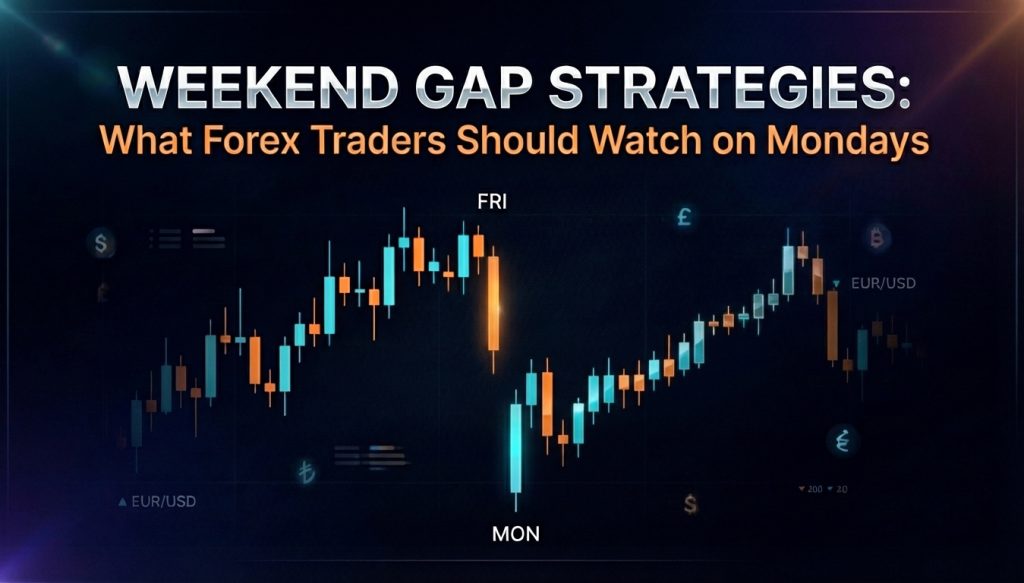
In forex gap trading, the main weekly gap appears between the Friday close and the Monday open because retail trading pauses over the weekend while global events keep moving. A gap can open higher or lower than Friday’s last traded price. Also, that move can trigger fear, fast entries, or bad exits if the trader has no plan.
What a Weekend Gap Really Says
A weekend gap is not random noise. It often reflects new information that hit the market while forex trading was closed. That can include political news, central bank talk, election results, conflict headlines, or a sudden shift in market mood. So, the first job on Monday is not to chase price. The first job is to read what the gap is saying.
A small gap in a quiet pair may mean little. A large gap in EUR/USD, GBP/USD, or USD/JPY can point to strong order flow at the open. However, size alone is not enough. The trader still needs to check whether price starts to pull back toward Friday’s close or keeps moving in the gap direction.
That difference matters. Some Monday gaps move back toward the prior close, which traders often call a gap fill. Meanwhile, other gaps keep running because the weekend event changed sentiment in a real way.
Why Monday Needs a Different Mindset
Monday is not just another session. Early trading can have wider spreads, thinner liquidity, and quick fake moves before London volume comes in. As a result, traders who jump in during the first few minutes often pay a high price for poor timing.
For crypto readers, this is a familiar setup. Weekend emotion can build a strong story before real liquidity returns. In forex, that story gets tested when the market opens, and bigger players start showing their hand. So, patience often beats speed on Monday morning.
A smart trader watches the first reaction, not just the first print. If price gaps up and then stalls under a key level, buyers may be weak. However, if the price gaps down and then cannot push lower, sellers may lose control.
Monday Gap Signals Traders Should Track
The table below shows what matters most during the Monday open.
| What to Watch | What It Can Mean | What a Trader Should Do |
| Gap size | A bigger gap can signal stronger news or stronger emotion | Compare the gap with recent Monday opens |
| Pair selection | Major pairs often react cleaner than thin pairs | Focus on EUR/USD, GBP/USD, and USD/JPY first |
| Spread at open | A wide spread can ruin entry quality | Wait for the spread to calm before acting |
| Friday close level | This is the key line for a possible gap fill | Mark it before the market opens |
| First 30 to 60 minutes | Early candles show whether the move is accepted or rejected | Let price show direction first |
| Weekend news flow | News often explains whether the move may continue | Check the economic calendar and headlines |
| Risk per trade | Gaps can skip normal exits | Cut position size and keep a hard risk limit |
A Simple Monday Plan That Makes Sense
A trader can start by marking three prices before the open. The first is the Friday close. The second is the Monday open. The third is the nearest support or resistance level on the four-hour chart. Also, that quick map helps remove guesswork.
Next, the trader should check the weekend news and the economic calendar. If the gap came after major news, a full reversal is less likely. If there were no strong driver, the chance of a gap fill may be higher.
Then comes the key question.
Is the price accepting the new level, or rejecting it?
If candles hold above the gap area after a gap up, continuation may be the stronger idea. However, if the price quickly drops back into Friday’s range, the market may be trying to close the gap.
Risk control matters more than the entry. A trader should keep position size small, especially during the first hour. Stop placement also needs space because Monday volatility can be messy. A tight stop loss placed in panic often gets hit before the real move starts.
When the Best Trade Is No Trade
Not every weekend gap deserves action. Some are too small to matter after the spread cost. Others are so large that the reward-to-risk picture looks poor from the start. So, skipping weak setups is part of the strategy, not a failure.
This is where many newer traders slip. They see a dramatic price action move and think a trade must be taken at once. In reality, a clean no-trade decision can protect the account far better than a forced entry.
Another warning sign is conflict between time frames. If the daily chart is in a strong uptrend, fading a small gap up can be risky. Meanwhile, trading with the bigger trend often gives the price more room to work.
Monday Gaps Reward the Prepared Trader
The real edge in weekend gap strategies does not come from guessing. It comes from reading context, waiting for structure, and respecting risk. A trader who marks the Friday close, watches the Monday open, checks the news, and waits for spreads to settle already stands in a better spot than the crowd.
For a crypto audience, the lesson is clear. Weekend emotion can shape Monday action across markets. In forex, that action becomes sharp and visible at the open. So, the trader who stays calm, keeps size under control, and reacts to proof instead of fear has the better chance over time.
Disclaimer: This article is for educational purposes only and does not give financial advice. Trading forex and crypto carries risk, and losses can exceed expectations.
Post Disclaimer
The information provided on Financepdia.com is for educational and informational purposes only and should not be considered financial, investment, or trading advice. Cryptocurrency and financial markets are highly volatile and involve significant risk. Readers should conduct their own research (DYOR) and consult with a qualified financial advisor before making any investment decisions. Financepdia.com and its authors are not responsible for any financial losses resulting from actions taken based on the information provided on this website.