







How to Identify Legit Crypto Projects and Avoid Scams 

How to Identify Legit Crypto Projects and Avoid Scams 

Are You Worried About Falling for Crypto Scams?

The rise of cryptocurrency has led to groundbreaking opportunities for investors. However, the rapid growth of the industry has also created an environment where scams and fraudulent projects thrive. As more people jump into the world of digital currencies, a common concern arises: 

How can you identify legit crypto projects and avoid scams?

This question is on the minds of many who are trying to navigate the complexities of the crypto space. With numerous projects emerging daily, some promising massive returns, it can be difficult to separate legitimate projects from the bad apples. 

In this article, we will break down how to spot trustworthy crypto ventures and steer clear of the ones that are too good to be true.

1. Research the Team Behind the Project

One of the first things to check when evaluating a crypto project is the team behind it. Legitimate crypto projects are often transparent about the identities and credentials of their team members. Look for publicly available information, such as LinkedIn profiles, personal websites, or other credible sources that verify their background. Transparency is key when it comes to assessing the credibility of a project.

On the other hand, scam projects tend to have anonymous or unclear team members. If the team cannot be easily identified or has a suspicious lack of details, it could be a red flag. Additionally, look for well-known advisors who can lend credibility to the project. If the project’s team has experience in the blockchain or crypto space, it’s a sign of legitimacy.

2. Investigate the Whitepaper

A whitepaper is a document that outlines the technical details, goals, and structure of a crypto project. It serves as a blueprint for the project and provides vital information about its purpose, vision, and roadmap. A well-written whitepaper is essential for any legitimate crypto project.

In contrast, scam projects may either not have a whitepaper at all or present one with vague, generic content. Look for clear explanations about the technology, tokenomics, and the use case of the project. If the whitepaper is difficult to understand or lacks essential details, it’s likely a scam. Always check for consistency between the project’s goals and its roadmap to ensure they align.

3. Look for Transparency in Tokenomics

Tokenomics refers to the economic model of a cryptocurrency. It includes the distribution of tokens, their total supply, and how the tokens will be used within the ecosystem. A legitimate crypto project will have a clear and reasonable tokenomics plan. This will be explained in detail in the whitepaper or on the project’s website.

If you encounter a project that has vague or overly complicated tokenomics, this is a major red flag. Scam projects often hide or manipulate token distribution to create artificial scarcity, inflating the token price or directing the majority of tokens to the project’s creators or early investors.

4. Community Engagement and Social Proof

Another way to evaluate a crypto project is by examining its community engagement. Legitimate projects often have active and engaged communities, including forums, social media groups, and dedicated followers. Check platforms like Telegram, Reddit, and Twitter for discussions and insights from users.

A scam project will often have fake followers or low levels of engagement. Be cautious of projects with suspiciously perfect feedback, where every comment seems overwhelmingly positive. A legitimate project will have a mix of feedback, including critical comments or suggestions for improvement.

Table: Key Indicators of Legitimate vs. Scam Crypto Projects


Indicator Legitimate Projects Scam Projects
Team Transparency Verified identities, public profiles, and experience Anonymous or unverifiable team members
Whitepaper Quality Clear, detailed, and technical Vague, overly simplified, or nonexistent
Tokenomics Logical and transparent distribution plan Manipulated or unclear token distribution
Community Engagement Active, engaged, and responsive communities Fake followers, overly positive feedback
Partnerships Verifiable collaborations with established companies Fake or unverified partnerships
Promises Realistic and grounded in achievable outcomes Unrealistic claims of guaranteed returns
Audits and Security Independent audits and secure systems Lack of audits or poor security measures
Market Behavior Stable, reasonable price movements Price manipulation, pump and dump schemes


5. Assess Partnerships and Collaborations

Another indicator of legitimacy is the project’s partnerships and collaborations. Reputable projects often form partnerships with well-established companies or influencers in the crypto space. These partnerships add credibility and show that the project is being taken seriously by professionals in the field.

However, be wary of projects that claim to have big-name partnerships but provide no verifiable evidence. Scammers will sometimes create fake press releases or falsely claim ties to big companies in order to manipulate investors.

6. Beware of Unrealistic Promises

If a crypto project seems too good to be true, it probably is. Legitimate projects are grounded in realistic goals and achievable outcomes. While the crypto space can be volatile and unpredictable, a real project will avoid making unrealistic promises of quick profits or guaranteed returns.

Watch out for projects that promise high returns with little to no risk. These are the hallmark signs of a scam. If you come across a crypto opportunity that guarantees profits, it’s a major warning sign to proceed with caution.

7. Check for Independent Audits and Security Measures

For any crypto project, security should be a top priority. Legitimate projects will undergo independent audits to ensure their code is secure and that there are no vulnerabilities in their system. You can check for third-party audit reports from trusted firms to confirm the security of the project.

Scam projects typically lack any independent audits or security features. They may have poorly written code that is susceptible to hacks or exploits. Always verify the security measures of the project before committing any funds.

8. Beware of Pump and Dump Schemes

A pump and dump scheme involves artificially inflating the price of a cryptocurrency by spreading false information, only for the creators to sell off their holdings once the price has been driven up. This is a classic scam in the crypto world, and it can be difficult to spot if you’re not paying attention.

Legitimate projects do not engage in manipulative trading practices or attempt to artificially inflate the price. Avoid projects that have sudden price spikes without clear reasons or that exhibit strong market manipulation behaviors.

Stay Vigilant and Protect Your Investments

In the fast-paced world of cryptocurrency, scams are prevalent, but with a cautious approach and thorough research, it is possible to identify legitimate projects and avoid falling for fraudulent schemes. Always ensure that you research the team behind the project, analyze the whitepaper, and verify partnerships. Most importantly, trust your instincts—if something seems too good to be true, it probably is. Staying vigilant and informed will allow you to invest in crypto safely and confidently.

Disclaimer: This article is for informational purposes only. It is not intended to provide financial advice. Always do your own research and consult with a financial advisor before making any investment decisions.


Post Disclaimer

The information provided on Financepdia.com is for educational and informational purposes only and should not be considered financial, investment, or trading advice. Cryptocurrency and financial markets are highly volatile and involve significant risk. Readers should conduct their own research (DYOR) and consult with a qualified financial advisor before making any investment decisions. Financepdia.com and its authors are not responsible for any financial losses resulting from actions taken based on the information provided on this website.
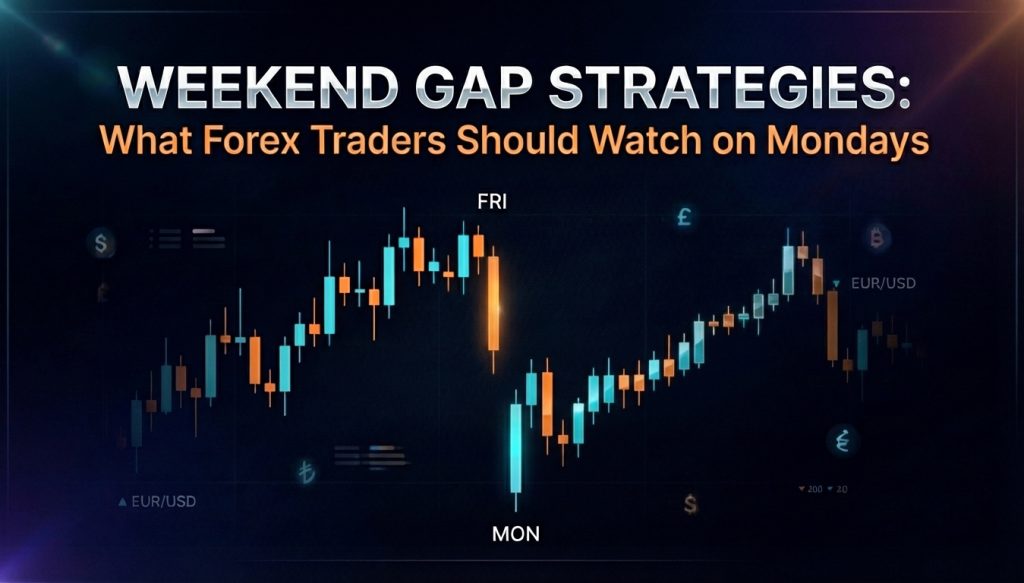

Weekend Gap Strategies: What Forex Traders Should Watch on Mondays

Weekend Gap Strategies: What Forex Traders Should Watch on Mondays

Can a calm weekend in crypto hide the kind of Monday move that catches a forex trader off guard? 

That question matters more than many new traders think. A quiet chart on Friday can turn into a sharp jump by the Monday open when fresh orders hit the market. For a crypto focused reader, the lesson feels familiar. News never really stops, and price can react fast when liquidity comes back.

In forex gap trading, the main weekly gap appears between the Friday close and the Monday open because retail trading pauses over the weekend while global events keep moving. A gap can open higher or lower than Friday’s last traded price. Also, that move can trigger fear, fast entries, or bad exits if the trader has no plan.

What a Weekend Gap Really Says

A weekend gap is not random noise. It often reflects new information that hit the market while forex trading was closed. That can include political news, central bank talk, election results, conflict headlines, or a sudden shift in market mood. So, the first job on Monday is not to chase price. The first job is to read what the gap is saying.

A small gap in a quiet pair may mean little. A large gap in EUR/USD, GBP/USD, or USD/JPY can point to strong order flow at the open. However, size alone is not enough. The trader still needs to check whether price starts to pull back toward Friday’s close or keeps moving in the gap direction.

That difference matters. Some Monday gaps move back toward the prior close, which traders often call a gap fill. Meanwhile, other gaps keep running because the weekend event changed sentiment in a real way.

Why Monday Needs a Different Mindset

Monday is not just another session. Early trading can have wider spreads, thinner liquidity, and quick fake moves before London volume comes in. As a result, traders who jump in during the first few minutes often pay a high price for poor timing.

For crypto readers, this is a familiar setup. Weekend emotion can build a strong story before real liquidity returns. In forex, that story gets tested when the market opens, and bigger players start showing their hand. So, patience often beats speed on Monday morning.

A smart trader watches the first reaction, not just the first print. If price gaps up and then stalls under a key level, buyers may be weak. However, if the price gaps down and then cannot push lower, sellers may lose control.

Monday Gap Signals Traders Should Track

The table below shows what matters most during the Monday open.


What to Watch What It Can Mean What a Trader Should Do
Gap size A bigger gap can signal stronger news or stronger emotion Compare the gap with recent Monday opens
Pair selection Major pairs often react cleaner than thin pairs Focus on EUR/USD, GBP/USD, and USD/JPY first
Spread at open A wide spread can ruin entry quality Wait for the spread to calm before acting
Friday close level This is the key line for a possible gap fill Mark it before the market opens
First 30 to 60 minutes Early candles show whether the move is accepted or rejected Let price show direction first
Weekend news flow News often explains whether the move may continue Check the economic calendar and headlines
Risk per trade Gaps can skip normal exits Cut position size and keep a hard risk limit


A Simple Monday Plan That Makes Sense

A trader can start by marking three prices before the open. The first is the Friday close. The second is the Monday open. The third is the nearest support or resistance level on the four-hour chart. Also, that quick map helps remove guesswork.

Next, the trader should check the weekend news and the economic calendar. If the gap came after major news, a full reversal is less likely. If there were no strong driver, the chance of a gap fill may be higher.

Then comes the key question. 

Is the price accepting the new level, or rejecting it? 

If candles hold above the gap area after a gap up, continuation may be the stronger idea. However, if the price quickly drops back into Friday’s range, the market may be trying to close the gap.

Risk control matters more than the entry. A trader should keep position size small, especially during the first hour. Stop placement also needs space because Monday volatility can be messy. A tight stop loss placed in panic often gets hit before the real move starts.

When the Best Trade Is No Trade

Not every weekend gap deserves action. Some are too small to matter after the spread cost. Others are so large that the reward-to-risk picture looks poor from the start. So, skipping weak setups is part of the strategy, not a failure.

This is where many newer traders slip. They see a dramatic price action move and think a trade must be taken at once. In reality, a clean no-trade decision can protect the account far better than a forced entry.

Another warning sign is conflict between time frames. If the daily chart is in a strong uptrend, fading a small gap up can be risky. Meanwhile, trading with the bigger trend often gives the price more room to work.

Monday Gaps Reward the Prepared Trader

The real edge in weekend gap strategies does not come from guessing. It comes from reading context, waiting for structure, and respecting risk. A trader who marks the Friday close, watches the Monday open, checks the news, and waits for spreads to settle already stands in a better spot than the crowd.

For a crypto audience, the lesson is clear. Weekend emotion can shape Monday action across markets. In forex, that action becomes sharp and visible at the open. So, the trader who stays calm, keeps size under control, and reacts to proof instead of fear has the better chance over time.

Disclaimer: This article is for educational purposes only and does not give financial advice. Trading forex and crypto carries risk, and losses can exceed expectations.


Post Disclaimer

The information provided on Financepdia.com is for educational and informational purposes only and should not be considered financial, investment, or trading advice. Cryptocurrency and financial markets are highly volatile and involve significant risk. Readers should conduct their own research (DYOR) and consult with a qualified financial advisor before making any investment decisions. Financepdia.com and its authors are not responsible for any financial losses resulting from actions taken based on the information provided on this website.

Best Passive Income Ideas That Can Generate Monthly Cash Flow

Best Passive Income Ideas That Can Generate Monthly Cash Flow

Can crypto still help build a monthly cash flow without watching charts all day or chasing the next hype coin?

That is the question many beginners and careful investors keep asking. They want passive income ideas that feel real, simple, and worth the risk. They also want income that can grow over time, not just one lucky trade.

For a crypto audience, the answer is yes, but only with the right plan. Crypto passive income is no longer just about buying a token and hoping it pumps. Today, it is more about picking systems that pay rewards for holding, staking, lending, or adding liquidity. However, not every option is safe, and not every yield lasts.

This article breaks down the best passive income ideas that can generate monthly cash flow for crypto-focused readers. It keeps the focus on methods that match the article title, reader intent, and current market behavior. As a result, readers can see which choices fit a beginner, which fit a higher-risk investor, and what to avoid.

Why Crypto Passive Income Still Gets Attention

Many investors want income without daily trading stress. That is why terms like crypto passive income, staking rewards, DeFi lending, yield farming, and monthly cash flow keep showing up in beginner searches and crypto guides. Recent educational pages from Coinbase on staking, Coinbase on crypto rewards, and Lido’s liquid staking page show that staking and reward-based models remain central to this space.

At the same time, regulators still warn that crypto yield products can carry serious risk. The U.S. investor bulletin on crypto interest-bearing accounts and the broader crypto asset securities alert both stress that losses can happen and investor protections may be limited. So, the smart path is not chasing the highest APY. It is choosing a method that fits the investor’s risk level.

Best Passive Income Ideas for Monthly Cash Flow in Crypto

1. Staking Blue-Chip Proof-of-Stake Coins

For many readers, staking is the cleanest starting point. A holder locks or delegates coins such as ETH, SOL, ADA, or ATOM and earns rewards for helping the network run. Coinbase explains staking as a way to earn rewards by putting crypto to work on a blockchain, and Lido shows how liquid staking lets ETH holders earn while keeping a usable token like stETH.

This method works best for investors who already plan to hold major proof-of-stake assets. In addition, it feels easier to understand than more advanced DeFi plays.

Why it works for monthly cash flow: rewards often build daily or over time, and they can be withdrawn or tracked as a recurring income stream.

2. Liquid Staking for More Flexibility

Traditional staking can lock funds. That is where liquid staking stands out. Lido states that users can stake ETH and receive stETH, which stays usable in the wider market while still reflecting staking rewards. Therefore, this can suit investors who want yield but also want room to move capital later.

Still, this option adds smart contract risk and token price tracking risk. So it is better for readers who understand basic DeFi wallets and on-chain tools.

3. DeFi Lending

Another strong option is DeFi lending. In simple terms, an investor deposits crypto into a lending market and earns interest when borrowers use that pool. This is one of the main models behind earn interest on crypto content across the market, and Coinbase’s rewards guide lists lending as one of the common reward paths in crypto.

This can work well with stable assets or large-cap crypto. Even so, readers should remember that lending has platform risk, token risk, and market stress risk.

4. Yield Farming and Liquidity Pools

Yield farming can create stronger returns, but it is not beginner-friendly. Investors add token pairs to liquidity pools and earn trading fees plus possible token rewards. Webopedia’s current guide notes that yield farming income often comes from transaction fees and incentive tokens, while also warning about impermanent loss.

This is a real passive income idea, but it should sit lower on a beginner’s list. For that reason, it fits readers who already know how DeFi pairs, pool ratios, and fee income work.

Quick Comparison Table


Passive income idea Best for Income style Main risk
Staking Beginners and long-term holders Steady reward flow Token price drops
Liquid staking Investors who want flexibility Staking rewards plus token mobility Smart contract risk
DeFi lending Moderate-risk investors Interest from borrowed funds Platform and borrower risk
Yield farming Advanced DeFi users Fees plus token rewards Impermanent loss and volatility


What Makes One Option Better Than Another

The best passive income idea is not the one with the loudest APY. It is the one that can still make sense after fees, taxes, price swings, and risk. A careful investor often starts with staking rewards on quality assets before moving into DeFi lending or yield farming.

Likewise, monthly cash flow in crypto should not be judged by payout speed alone. A method may pay often, but if the asset drops hard, the income does not help much. That is why simple, repeatable systems often beat flashy ones.

The Smart Way to Think About Monthly Cash Flow

A crypto investor who wants a monthly income should think in layers. One layer can be staking on major proof-of-stake coins. Another layer can be a smaller share in liquid staking or DeFi lending. Higher-risk methods, such as yield farming, should stay small unless the investor already knows the mechanics well.

Most importantly, passive income in crypto is still tied to market risk. It is income, but it is not fixed salary income. That mindset helps readers avoid poor choices.

Final Thoughts: Build Cash Flow Without Chasing Hype

The best passive income ideas that can generate monthly cash flow in crypto are the ones built on clear use, simple logic, and controlled risk. For most readers, that means starting with staking, learning how liquid staking works, and only then looking at DeFi lending or yield farming.

That path may look slower. Yet, slower often wins in crypto. A reader does not need ten income streams. A reader needs one or two solid systems that can be understood, tracked, and improved over time.

Disclaimer: This article is for educational purposes only and does not give financial, legal, or tax advice. Crypto assets are risky, volatile, and can lead to loss of capital. Readers should do their own research before making any decision.


Post Disclaimer

The information provided on Financepdia.com is for educational and informational purposes only and should not be considered financial, investment, or trading advice. Cryptocurrency and financial markets are highly volatile and involve significant risk. Readers should conduct their own research (DYOR) and consult with a qualified financial advisor before making any investment decisions. Financepdia.com and its authors are not responsible for any financial losses resulting from actions taken based on the information provided on this website.