






Worried that one bad crypto cycle could wipe out years of hard-earned gains?
That fear is common among new investors who want growth but do not want to depend on one coin, one trend, or one market phase. A diversified investment portfolio gives a better path. It helps spread risk, smooth returns, and keep a long-term plan in place.
For a crypto-focused investor, this matters even more. Crypto assets carry traditional investing risk plus extra risks tied to volatility, custody, and service providers, according to FINRA’s crypto assets guidance.
Asset allocation, diversification, and rebalancing are also core investing principles highlighted by the SEC’s Investor.gov guide. So, the goal is not to chase everything. The goal is to build a portfolio that can grow through time.
Why Diversification Matters for Crypto Investors
A portfolio is not diversified just because it holds many assets. If all holdings move the same way, the risk is still concentrated. The SEC’s investor education materials note that diversification should happen between asset categories and within asset categories.
That means a crypto investor should not stop at buying several altcoins. Bitcoin, Ethereum, large-cap crypto, selective altcoins, stable reserve cash, stocks, bonds, and cash equivalents can each play a different role. Also, the SEC warns that even investors who own several funds should still check the top holdings to see if they really differ. The same logic fits crypto. Ten coins from the same trend are still one crowded bet.
Start with Asset Allocation, Not Coin Picking
The strongest portfolios are built from percentages first. Coins come second. This helps an investor control emotion and avoid random buying. Asset allocation is the split between different asset groups based on time horizon, goals, and risk tolerance. That is a central point in the SEC guide on asset allocation and diversification.
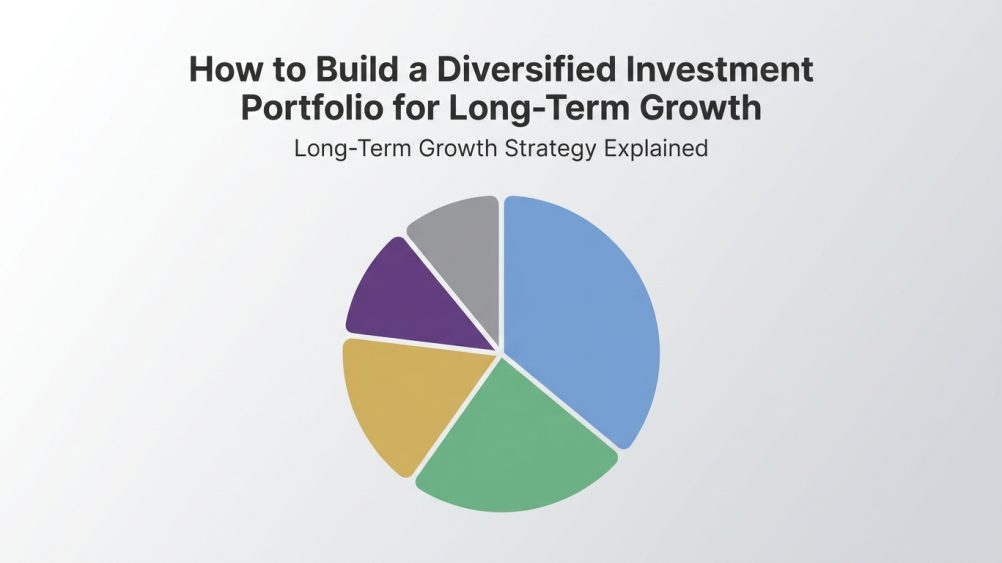
For long-term growth, a crypto-leaning investor may use a simple structure like this:
| Portfolio Bucket | Purpose | Example Range |
| Core traditional assets | Stability and broad market growth | 50% to 70% |
| Core crypto holdings | Long-term upside from major networks | 15% to 25% |
| Higher-risk crypto ideas | Measured growth potential | 5% to 10% |
| Cash or short-term reserve | Flexibility and drawdown control | 10% to 20% |
This is not a fixed rule. It is a planning model. However, it shows a key point: a long-term investment portfolio does not need to be all-in on crypto to benefit from crypto growth. In fact, some CFA Institute analysis notes that crypto may offer diversification benefits for long-horizon investors, but only for those who can handle added short-term volatility.
Build Around a Strong Core
In crypto, the core usually starts with Bitcoin and Ethereum because they tend to be the most established and most watched assets in the market. Then the investor can add a small number of carefully chosen altcoins from different sectors such as infrastructure, DeFi, or exchange-related ecosystems. Also, a small cash reserve can help during sharp pullbacks.
This structure avoids a common mistake. Many beginners think diversification means owning as many coins as possible. It does not. Real portfolio diversification means owning assets with different jobs inside the portfolio. So, one part targets growth, one part manages risk, and one part gives liquidity when prices fall.
Use Dollar Cost Averaging to Reduce Timing Mistakes
A good portfolio can still fail if entries are poor and emotional. That is why dollar cost averaging matters. Coinbase explains DCA as investing a fixed amount at regular intervals, no matter the current price. This can reduce the impact of volatility and remove the pressure of trying to time the market.
For example, instead of putting all funds into crypto in one week, an investor can spread buys over months. Meanwhile, the same method can work for traditional assets too. This makes the process calmer, simpler, and easier to follow through a full market cycle.
Rebalance Before the Portfolio Drifts Too Far
Over time, winners grow faster than the rest of the portfolio. That sounds good, but it can create hidden risk. If crypto jumps from 20% to 40% of a portfolio, the investor may now hold far more risk than planned. The SEC and Investor.gov both highlight rebalancing as a key way to bring a portfolio back to its target mix.
A simple rule works well here. Check the portfolio every quarter or every six months. Then trim overweight positions and add to underweight areas if the long-term view still makes sense. In addition, this process builds discipline. It helps the investor sell some heat and add where prices are more reasonable.
Risk Control Matters More Than Hot Picks
Crypto investors often search for the next 50x coin. Yet long-term results usually come from risk control, not excitement. FINRA states that crypto investing includes added risks beyond traditional markets. So, position sizing matters. Security matters. Storage matters.
That is why many investors cap speculative crypto at a small part of the portfolio. A simple rule is to keep high-risk tokens limited to the amount one can afford to see drop hard without changing the full plan. As a result, one bad trade does not ruin the entire portfolio.
The Simple Formula That Often Works Best
A practical long-term growth portfolio often follows this pattern:
- Own a broad core
- Keep crypto at a measured weight
- Spread crypto across a few different use cases
- Buy on a schedule
- Rebalance on a schedule
- Do not confuse activity with progress
That approach fits both search intent and real investor behavior. Readers looking for how to build a diversified investment portfolio, crypto portfolio diversification, asset allocation, risk management, and long term growth investing want a plan they can actually use. This one is clear, simple, and realistic.
A Smarter Path to Long-Term Growth
The best diversified portfolio is not the most complex one. It is the one an investor can hold through fear, greed, and market noise. Long-term growth comes from balance, patience, and repeatable habits. Crypto can be part of that future. However, it works better as one part of a wider plan, not the whole plan.
So, when an investor builds around asset allocation, diversification, dollar cost averaging, and rebalancing, the portfolio has a better chance to grow without becoming fragile. That is the real edge. Not guessing the next winner, but building something strong enough to last.
Disclaimer: This article is for general informational purposes only and does not offer financial, legal, or tax advice. All investments, especially crypto assets, carry risk, including possible loss of principal. Readers should do their own research and speak with a licensed financial adviser before making investment decisions.
Post Disclaimer
The information provided on Financepdia.com is for educational and informational purposes only and should not be considered financial, investment, or trading advice. Cryptocurrency and financial markets are highly volatile and involve significant risk. Readers should conduct their own research (DYOR) and consult with a qualified financial advisor before making any investment decisions. Financepdia.com and its authors are not responsible for any financial losses resulting from actions taken based on the information provided on this website.