





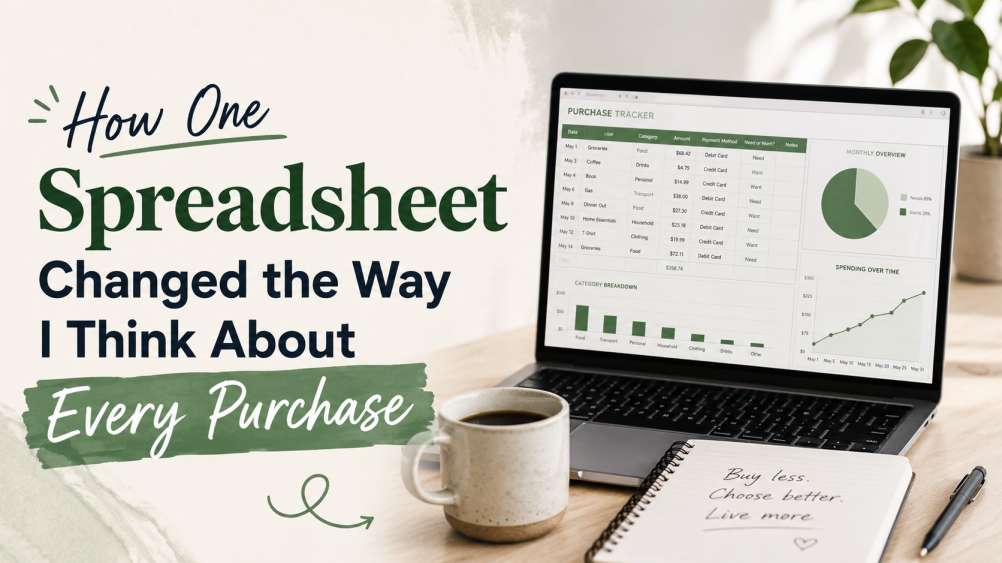
I used to treat small purchases as if they did not matter. A coffee here, a snack there, one quick online order. None of it felt serious at the moment. Then I started spreadsheet budgeting and had to type each amount myself. That small habit changed how the purchase felt. The number did not hide inside my bank app anymore. It sat in front of me, plain and clear.
I saw where my money actually went. I also saw how often I checked my balance too late. I was not always making one big money mistake. I was making many small choices without noticing them. That was harder to admit than any single bill. The spreadsheet did not shame me. It simply made the truth harder to avoid.
For the first time, spending felt connected to my goals. Each purchase became a question, not just a swipe. Was this helping me, or moving me further away?
The First Time I Had to Type in Every Purchase
The first few days with the spreadsheet were not smooth. I had to enter groceries, fuel, subscriptions, meals out, and small online orders. It felt slow. It also felt a little annoying. I was used to spending and moving on. Now every purchase needed a place.
At first, the categories felt too honest. Groceries were not just groceries anymore. Eating out had its own row. Fuel, bills, pets, and debt payments had their own spots too. I could see which parts of my month were planned. I could also see which parts were just habits.
That was the uncomfortable part. The spreadsheet showed patterns I had ignored for years. A few small orders added up faster than I expected. Manual tracking made me pause after each purchase. It made me ask why I bought it. Typing each amount made the money feel real. I was not only tracking spending. I was learning how my choices worked.
Why a Simple Sheet Felt More Honest Than an App
Budgeting apps sounded easier at first. They pulled numbers in without much work. That was also the problem for me. The spending moved in the background, but I did not feel it. I could open the app, see a chart, and close it again. Nothing about that changed my habits for long.
The spreadsheet felt different because I had to do the work. It made me stop and enter each amount myself:
- Five dollars for coffee
- Thirty dollars for takeout
- A small charge from an online order
- A subscription I forgot was still active
Each number asked me to pause for a second. That pause made the money feel real. Over time, the sheet became more than a tracker. It became a mirror. It showed what I said mattered and what I actually bought. That was not always comfortable. But it helped me question the next purchase sooner.
The Moment Every Purchase Started Asking a Question
Before the spreadsheet, I asked one thing before buying: “Can I afford this?” If the answer felt like yes, I bought it. That made spending feel simple. But it also made my goals easy to ignore. A small order did not feel connected to debt. A meal out did not feel connected to savings.
After a few weeks, the question changed. I started asking, “Do I want to record this?” That was a different kind of pause. I could still buy the thing. The spreadsheet did not stop me. But it made me face the choice before and after.
That pause helped more than any rule I had tried. Small purchases started sitting beside bigger goals. Debt payments, savings, bills, and habits were on the same sheet. Impulse buying became harder because I could see the trade-off. Every purchase had a cost beyond the price. It either moved me closer, or pulled me away.
Watching Debt Go Down Made the Effort Feel Real
The first reward was not extra money. It was seeing debt move down. Before the spreadsheet, I made payments and hoped they helped. I knew money had been left in my account. But I did not always see what changed. The sheet made every payment easier to understand.
I started tracking the parts that mattered most:
- Each debt balance is month by month
- The payment amount
- Interest added
- Remaining balance
- Planned money vs actual money
Some months were better than expected. Other months showed where I had slipped. Either way, the numbers gave me a clear view. Progress was no longer a guess. It was there in rows, totals, and smaller balances. Even a small payment felt useful when I could see the result. The spreadsheet helped me connect daily choices with long-term goals.
What the Spreadsheet Taught Me About Money and Myself
The spreadsheet did not fix my money overnight. I still had to make choices. I still had weak days. But money felt less scary when I could see it clearly. The sheet gave every dollar a place. It helped me stop guessing.
Over time, every purchase started to feel like a choice. Some choices helped my goals. Some pulled money away from them. The real change was awareness, not perfection. I learned that discipline grows slowly. It grows when the truth is easy to see. The spreadsheet changed how each purchase felt before it happened.
Disclaimer: This article is for informational purposes only and is not financial, legal, or credit advice. Always read lender terms carefully and consult a qualified advisor before applying.
Post Disclaimer
The information provided on Financepdia.com is for educational and informational purposes only and should not be considered financial, investment, or trading advice. Cryptocurrency and financial markets are highly volatile and involve significant risk. Readers should conduct their own research (DYOR) and consult with a qualified financial advisor before making any investment decisions. Financepdia.com and its authors are not responsible for any financial losses resulting from actions taken based on the information provided on this website.