




Think back to early 2025. Big forex desks saw the tariff storm coming. They hedged fast. Retail traders? Most got the news late. By then, the dollar had already moved. That gap stings. Institutions react in seconds. Regular folks scramble to catch up.
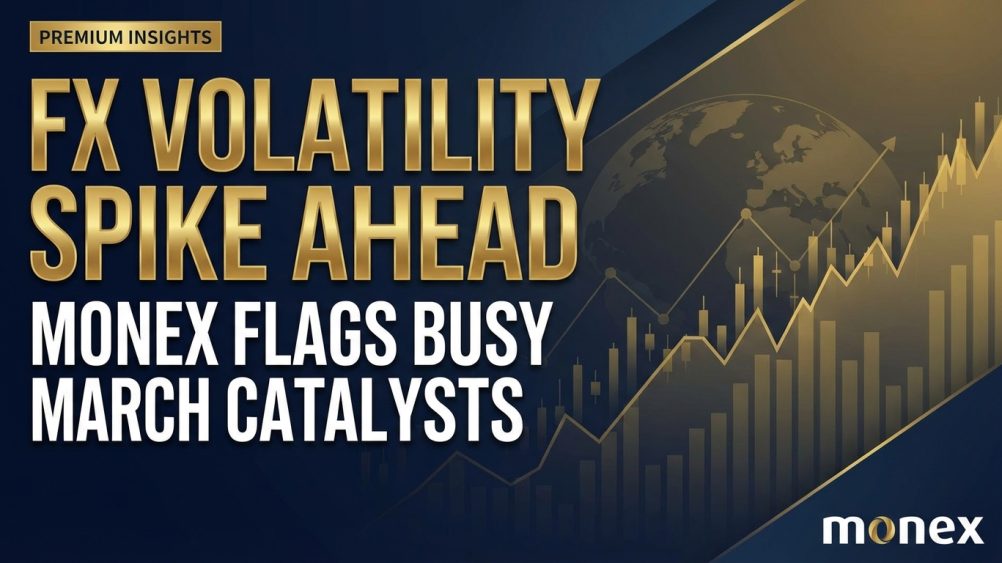
That same gap is forming right now. Monex just flagged March 2026 as a high-volatility month. Their analysts see catalysts stacking up fast. Central bank meetings, oil shocks, and tariff chaos all land this month. FX volatility could spike hard. If you trade currencies, this matters. Let us break it all down.
Key Takeaways
March brings more catalysts than February did. The Fed, BoE, and ECB all meet this week. Oil prices near $100 push inflation fears higher. The Supreme Court’s tariff ruling reshapes trade policy. Monex expects bigger swings ahead. Protect trades with stops and smart sizing.
Why Monex Says March Looks Busy
Monex released their March 2026 FX Forecasts on February 26. The report comes from Nick Rees, Head of Macro Research, and Barry van der Laan, Senior FX Market Strategist. Their view is clear. February was calm for the dollar. The DXY index barely moved. But March is different.
They point to a busier roster of catalysts ahead. More events mean more price swings. That means FX volatility rises. For traders, this is both risk and opportunity.
Two big stories sit at the top. First, rising tensions in the Middle East. Second, US tariff policy after the Supreme Court struck down IEEPA tariffs on February 20. These two forces pull the dollar in opposite directions. That tug-of-war creates choppy, volatile trading conditions.
The Catalysts Driving FX Volatility This Month
Here is what is shaking up forex markets right now.
| Catalyst | Date / Status | FX Impact |
| Fed FOMC meeting and dot plot | March 17-18, 2026 | Rate hold expected at 3.50%-3.75%. Dot plot signals key. |
| BoE rate decision | March 19, 2026 | Hold expected at 3.75%. War changed rate cut outlook. |
| ECB rate decision | March 19, 2026 | Hold likely. Lagarde exit rumors add uncertainty. |
| Supreme Court strikes IEEPA tariffs | Feb 20, 2026 (ongoing fallout) | Section 122 tariffs at 15% replace IEEPA. Dollar impact mixed. |
| Middle East conflict and oil shock | Ongoing | The Strait of Hormuz was disrupted. Oil near $100. Dollar gains safe-haven flows. |
| US inflation data (CPI, PCE) | Released this month | January CPI at 2.4% YoY. PCE at 2.9%. Both above Fed’s 2% target. |
Three central banks meet in one week. That alone can spike currency volatility fast.
The Middle East Factor
This is the wildcard. The conflict involving Iran has pushed oil prices sharply higher. Brent crude recently traded above $85 per barrel. Some reports show prices briefly crossing $100. The Strait of Hormuz carries about 20% of global daily oil supply. Its disruption is a real supply shock.
Higher oil lifts inflation fears everywhere. Central banks then pause or delay rate cuts. The BoE had been expected to cut in March. That is now off the table. Markets have even started pricing in a possible rate hike in the UK this year.
For forex, this means safe-haven flows into the US dollar. Pairs like EUR/USD, GBP/USD, and USD/JPY swing harder. Volatility rises across the board.
The Tariff Shakeup
On February 20, the US Supreme Court ruled 6-3 that IEEPA does not authorize the President to impose tariffs. This struck down the sweeping “Liberation Day” tariffs from 2025. President Trump quickly replaced them with Section 122 tariffs at 15%. But Section 122 tariffs expire in 150 days unless Congress extends them.
This creates fresh uncertainty. Monex notes this development holds opposing dollar implications. Short-term, it reduces some tariff shock. Long-term, new trade investigations under Section 301 could bring tariffs back to IEEPA levels. Traders must watch this space closely.
How to Navigate This Volatility
- Use stop-losses on every trade. Wild swings can wipe gains fast.
- Watch the Fed dot plot on March 18. It shows where officials expect rates to go.
- Track oil prices daily. They drive inflation expectations now.
- Size positions smaller in high-volatility weeks.
- Follow BoE(Bank of England) and ECB(European Central Bank) decisions on March 19. Rate surprises move pairs hard.
- Do not over-leverage. Bigger moves mean bigger losses if wrong.
Volatility is not the enemy. Poor preparation is. Smart traders use swings to find better entries.
Volatility Is Here. Are You Ready?
Monex got it right. March 2026 is packed with catalysts. Central banks, oil shocks, and tariff uncertainty all collide this month. FX volatility is rising. The dollar sits at the center of every move.
Stay sharp. Watch the data. Manage your risk. Markets reward those who prepare and punish those who guess.
This article is for informational purposes only. It is not financial advice. Always do your own research before trading. Past performance does not guarantee future results.
Frequently Answered Questions
How does the Supreme Court IEEPA ruling affect forex markets?
It removed sweeping tariffs and added new uncertainty. The switch to Section 122 tariffs at 15% is temporary. Traders now watch for new trade actions. This keeps the dollar choppy across major pairs.
Why are three central bank meetings in one week a big deal for FX?
Each decision can shift a currency’s value fast. When the Fed, BoE, and ECB all meet within days, surprises stack up. Traders must manage risk across multiple pairs at once.
What role does the Fed dot plot play in currency trading?
The dot plot shows where each Fed official expects interest rates to go. If the dots shift toward more cuts, the dollar weakens. If they hold or rise, the dollar strengthens. It moves markets more than the rate decision itself.
Disclaimer: This article is for informational and educational purposes only and should not be considered financial or investment advice. Cryptocurrency markets are volatile and involve risk.
Sources: Monex’s March 2026 FX Forecasts
Post Disclaimer
The information provided on Financepdia.com is for educational and informational purposes only and should not be considered financial, investment, or trading advice. Cryptocurrency and financial markets are highly volatile and involve significant risk. Readers should conduct their own research (DYOR) and consult with a qualified financial advisor before making any investment decisions. Financepdia.com and its authors are not responsible for any financial losses resulting from actions taken based on the information provided on this website.