






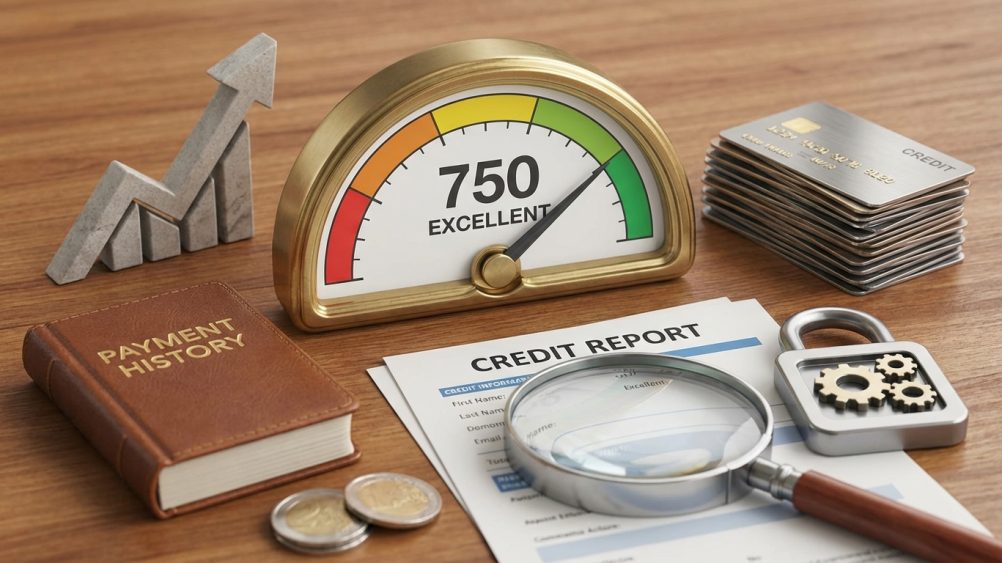
Credit Score Basics: How Traders Can Protect Their Financial Life

Credit Score Basics: How Traders Can Protect Their Financial Life

You’re watching your crypto portfolio. But who’s watching your credit score? Most traders obsess over price charts. Meanwhile, their credit score quietly takes damage from habits they don’t even notice. A missed payment here. 

A maxed-out card there. Suddenly, you can’t get a mortgage, a car loan, or even a decent apartment.

The irony? You could be up 40% in crypto and still be financially locked out of everyday life. Your credit score doesn’t care about your portfolio gains.

Key Takeaways

  • Credit scores affect more than loans. Landlords, employers, and insurers all check your credit. A low score costs you in ways that go beyond interest rates.
  • Payment history is the biggest factor. It accounts for 35% of your FICO score. One missed payment can drop your score significantly.
  • Credit utilization matters too. Using more than 30% of your available credit limit hurts your score, even if you pay it off monthly.
  • Crypto gains don’t build credit. No matter how well your portfolio performs, crypto activity does not appear on your credit report.
  • Monitoring is free and essential. You can check your credit report for free at AnnualCreditReport.com once per week through 2026.

What a Credit Score Actually Is

A credit score is a three-digit number. It usually ranges from 300 to 850.

Lenders use it to decide if they’ll lend you money. A higher score means better terms and lower interest rates.

The most widely used model is the FICO score. Most lenders consider 670 and above to be “good.” Scores above 740 unlock the best rates.

Think of it as your financial reputation. It follows you everywhere.

Why Traders Are Especially at Risk

Trading creates financial habits that can quietly wreck your credit.

When markets are hot, traders often overspend. Credit cards get used for gear, software, or even to fund trades. Balances creep up. Payments get missed during stressful drawdowns.

Crypto traders also tend to move money in unpredictable patterns. Large transfers in and out of accounts can look unusual to banks. Some banks have even closed accounts for repeated crypto-related activity.

None of this shows up on your price chart. But it all shows up on your credit report.

The Five Factors That Make Up Your Score

Understanding the breakdown helps you protect each part deliberately.

Factor Weight What It Measures
Payment history 35% Do you pay on time, every time?
Credit utilization 30% How much of your available credit are you using?
Length of credit history 15% How long have your accounts been open?
Credit mix 10% Do you have different types of credit?
New credit inquiries 10% How often are you applying for new credit?

Each factor tells a story about financial reliability. Miss one consistently and your score reflects it.

The Habits That Quietly Damage Your Score

Most credit damage happens slowly. Here’s what to watch:

  • Late payments: Even one payment 30 days late can drop your score by up to 100 points.
  • High utilization: Carrying balances above 30% of your credit limit signals financial stress to lenders.
  • Closing old accounts: This shortens your credit history and can raise your utilization ratio overnight.
  • Applying for too much credit at once: Each hard inquiry can knock a few points off. Multiple applications in a short window looks desperate to lenders.
  • Co-signing for others: If they miss a payment, it hits your credit too.

Credit Score Basics: How Traders Can Protect Their Financial Life

How to Actively Protect Your Credit While Trading

You don’t need to stop trading. You need systems that run in the background.

Set up autopay for every bill. Even the minimum payment protects your payment history. Full payment is better, but autopay prevents disasters.

Keep a dedicated credit card for everyday purchases only. Don’t use it for trading-related expenses. Pay it in full each month. This keeps utilization low and builds a consistent payment record.

Review your credit report regularly. Errors are more common than most people realize. Disputing a mistake can raise your score quickly. Use AnnualCreditReport.com to access your reports for free.

Consider a credit monitoring service. Many are free and alert you to sudden changes. Catching a problem early limits the damage.

What a Good Score Actually Gets You

A strong credit score isn’t just about loans. It affects your whole financial life.

A score above 740 can save you tens of thousands of dollars over a 30-year mortgage. The difference in interest rates between a 620 and a 760 score on a $400,000 home loan can exceed $100,000 in total payments.

Good credit also means better car insurance rates in most U.S. states. It means landlords approve your applications. It means employers in finance-related fields see you as a low-risk candidate.

Your crypto portfolio and your credit score are two separate pillars of financial health. Both need attention.

Frequently Asked Questions

Can using a crypto credit card help build my credit score?

Yes, if the card is a traditional credit card that offers crypto rewards, it reports to credit bureaus just like any other card. Using it responsibly and paying on time will build your score. Cards that operate purely on-chain or as prepaid cards generally do not report to bureaus and won’t help your credit. 

Always confirm whether a card reports to the major bureaus before using it as a credit-building tool.

How does a bankruptcy from trading losses affect your credit, and for how long?

A Chapter 7 bankruptcy stays on your credit report for 10 years. Chapter 13 stays for 7 years. During that time, getting new credit is difficult and expensive. Some lenders won’t work with you at all. Recovery is possible but requires years of disciplined rebuilding through secured cards, on-time payments, and low utilization.

Is there a credit equivalent for crypto, and could it replace traditional credit scoring?

Some projects are building on-chain credit scoring based on wallet history, repayment of DeFi loans, and transaction behavior. These systems exist but are not recognized by traditional lenders or credit bureaus yet. They may matter more in a fully decentralized financial future. 

For now, your FICO score is what landlords, banks, and employers use. Both systems will likely coexist for years before any meaningful convergence happens.

Sources 

  1. MyFICO – “What’s in My FICO Score”: https://www.myfico.com/credit-education/whats-in-your-credit-score
  2. Experian – “How Much Does a Late Payment Affect Your Credit Score”: https://www.experian.com/blogs/ask-experian/how-much-does-a-late-payment-affect-credit-score/
  3. AnnualCreditReport.com – Free Credit Report Access: https://www.annualcreditreport.com
  4. Consumer Financial Protection Bureau – Credit Reports and Scores: https://www.consumerfinance.gov/consumer-tools/credit-reports-and-scores/

This article is for informational purposes only. It is not financial advice. Always do your own research.


Post Disclaimer

The information provided on Financepdia.com is for educational and informational purposes only and should not be considered financial, investment, or trading advice. Cryptocurrency and financial markets are highly volatile and involve significant risk. Readers should conduct their own research (DYOR) and consult with a qualified financial advisor before making any investment decisions. Financepdia.com and its authors are not responsible for any financial losses resulting from actions taken based on the information provided on this website.
Buy Now Pay Later Is the New Debt Trap: What the Fine Print Does Not Tell You

Buy Now Pay Later Is the New Debt Trap What the Fine Print Does Not Tell You

Buy Now Pay Later looks harmless at checkout. A $200 cart becomes four payments of $50. That feels easier than paying the full amount today. The problem starts when five small plans hit your account in the same month.

BNPL is still debt. It may not look like a credit card. It may not charge interest at first. But it is still a loan with payment dates, penalties, and possible credit risks. NerdWallet also notes that BNPL is a loan and can hurt users who fall behind. 

What Is Buy Now Pay Later?

Buy Now Pay Later, or BNPL, lets shoppers split purchases into smaller payments. Most common plans use four payments over about six weeks. The first payment is usually due at checkout.

This sounds simple. That is why it works so well. The full price feels smaller because the app shows the installment first. The National Consumer Law Center warns that BNPL can make purchases look cheaper than they are. 

The danger is not one payment plan. The danger is stacking several plans together. A dress, phone case, shoes, groceries, and travel booking can become five separate debts.

Why BNPL Feels Safe

BNPL feels safe because many plans promote zero interest. Some also use soft credit checks. Approval can be fast. The checkout process feels like choosing a payment method, not taking a loan.

That is the trap. The decision happens when your emotions are high. You already want the product. The app then lowers the pain of payment.

BNPL also avoids the fear people have about credit cards. Many users think, “At least I am not using a credit card.” But that does not mean they are avoiding debt.

The Fine Print Most Shoppers Miss


Fine print issue What it means for shoppers
Late fees A missed payment can add extra cost.
Auto-debit rules Payments may hit your bank account automatically.
Overdraft risk A failed bank payment can create overdraft fees.
Return delays You may still owe payments while a return is processed.
Credit reporting Missed payments can reach collections or credit bureaus.
Multiple due dates Several small plans can become hard to track.


The fine print matters because BNPL does not always show the real cost upfront. NCLC says late fees, bounced payment fees, and other charges can make “free” BNPL harder to compare with credit cards. 

The Real Debt Trap Is Payment Stacking

One BNPL plan may be manageable. Four or five plans can become a problem.

The CFPB found that about 63% of BNPL borrowers had multiple simultaneous loans during the year. It also found that 33% used multiple BNPL lenders. That means many users were not managing one simple plan. They were managing several payments across different companies. 

This is where budgeting breaks. A credit card gives one bill each month. BNPL can create several payment dates. Those dates may fall between rent, bills, school fees, or groceries.

Late Payments Are Becoming Common

BNPL users are falling behind more often. The Federal Reserve reported that 15% of adults used BNPL in 2024. Among users, 24% were late making a payment. That was a clear rise from the previous year. 

The same report found that 57% of late BNPL users were charged extra. So even when a plan starts as interest-free, missed payments can still cost money. 

This is why BNPL can hurt people with tight budgets. If your account is short by even a small amount, one failed payment can trigger more fees.

BNPL Can Affect Your Credit

Many BNPL plans have not always appeared on credit reports. That made users think BNPL had no credit risk. That is not always true.

Bankrate explains that missed BNPL payments can be harmful if they are reported. If the debt is sent to collections, credit bureaus may be notified. A reported missed payment can then lower your score. 

There is another problem. Responsible BNPL use may not always help your score. Bank rate notes that BNPL has mostly operated outside credit reporting. So users may take on repayment risk without building much credit history. 

Returns and Refunds Can Get Messy

Returns are another hidden issue. You may send the item back, but the BNPL lender may still expect payment until the refund is processed.

The CFPB previously said BNPL lenders should provide dispute and refund rights similar to credit cards. It noted that more than 13% of BNPL transactions involved a return or dispute in one market report. 

However, BNPL rules have also shifted. In 2025, the CFPB said it would not prioritize enforcement under its 2024 BNPL rule. It also later noted that the 2024 BNPL Interpretive Rule was withdrawn. 

That makes the key lesson simple. Do not assume refunds will be smooth. Read the return and dispute terms before using BNPL.

When BNPL May Be Useful

BNPL is not always bad. It can help when the purchase is planned, necessary, and already affordable. For example, it may help with a needed appliance if the payments fit your budget.

But BNPL becomes risky when it funds impulse buying. It is also risky for groceries, bills, rent, or lifestyle upgrades. If you need BNPL for basics, the issue may be cash flow, not convenience.

How to Avoid the BNPL Debt Trap

Use this rule first: If you cannot afford the full price today, think twice before splitting it.

Before clicking BNPL, check these points:

  • Total price: Do not focus only on the first payment.
  • Due dates: Add every payment to your calendar.
  • Fees: Check late fees, rescheduling fees, and failed payment fees.
  • Refund policy: See what happens if you return the item.
  • Credit impact: Check whether missed payments may be reported.
  • Number of plans: Avoid using more than one or two at a time.

The safest BNPL plan is one you barely need. The riskiest plan is one that makes an unaffordable purchase feel affordable.

Final Verdict

Buy Now Pay Later is marketed as flexible spending. In reality, it can become silent debt. It hides the full price. It spreads payments across weeks. It can create fees, overdrafts, missed payments, and credit damage.

The fine print does not always shout. It waits until your payment fails.

BNPL is not free money. It is not a discount. It is not safer just because it looks smaller. It is debt with better branding.

FAQs

Is Buy Now Pay Later bad?

Not always. It can be useful for planned purchases. It becomes risky when it encourages overspending or covers things you cannot afford.

Does BNPL charge interest?

Many pay-in-four plans advertise zero interest. Still, some providers may charge late fees, bounced payment fees, or other costs.

Can BNPL hurt my credit score?

Yes, it can. Missed payments may hurt your credit if they are reported or sent to collections. 

Why is BNPL called a debt trap?

It can make purchases feel cheaper. It also lets users stack several small loans. Those small payments can become hard to manage.

Should I use BNPL for groceries or bills?

It is better to avoid that. Using BNPL for basic needs may signal a deeper budget problem.

Post Disclaimer

The information provided on Financepdia.com is for educational and informational purposes only and should not be considered financial, investment, or trading advice. Cryptocurrency and financial markets are highly volatile and involve significant risk. Readers should conduct their own research (DYOR) and consult with a qualified financial advisor before making any investment decisions. Financepdia.com and its authors are not responsible for any financial losses resulting from actions taken based on the information provided on this website.

How to Pay Zero Capital Gains Tax Legally: The Strategy Wealthy Investors Use

How to Pay Zero Capital Gains Tax Legally: The Strategy Wealthy Investors Use

What if a crypto investor could sell Bitcoin, Ethereum, or other digital assets after a big gain and still owe zero federal capital gains tax? 

That question is not just for billionaires. It matters to beginners, too, especially when one strong market cycle can turn a small crypto position into a serious tax problem.

Many investors only think about taxes after they sell. That is a costly mistake. The IRS says digital asset transactions may need to be reported, and crypto gains can be taxed when assets are sold, swapped, or used in certain transactions.

However, wealthy investors often plan before selling. Their goal is simple. They aim to keep more of the gain legally by timing sales, lowering taxable income, donating appreciated assets, and using special tax rules.

The Core Rule Behind Zero Capital Gains Tax

The key phrase is long-term capital gains. In the U.S., assets held for more than one year may qualify for lower long-term capital gains rates. The IRS notes that short-term capital gains are taxed as ordinary income, while net capital gains may receive different tax treatment.

For 2026, the IRS released inflation adjustments for tax provisions through Revenue Procedure 2025-32. IRS 2026 tax inflation adjustments. Third-party tax summaries report that the 0% long-term capital gains bracket applies up to $49,450 for single filers and $98,900 for married couples filing jointly in taxable income. 

So, the legal path to zero capital gains tax often starts with this idea. Keep taxable income low enough that part or all of the long-term gain falls into the 0% capital gains tax rate.

How Wealthy Investors Structure the Move

The method is not magic. It is a stack of careful steps. First, the investor holds crypto for more than one year. Next, the investor sells in a low-income year. Then, losses, deductions, and charitable gifts may reduce taxable income even further.

For example, an investor may take a sabbatical, retire early, sell a business, or have a year with lower income. During that year, they may sell a portion of appreciated crypto while staying inside the 0% long-term capital gains bracket.

However, this must be calculated carefully. Wages, staking rewards, airdrops, interest, dividends, business income, and the crypto gain itself can all affect taxable income.


Legal Tax Move How It Can Cut Crypto Tax Best Fit
Hold for more than one year May move gains from short-term rates to long-term capital gains rates Investors with strong conviction
Sell in a low-income year May qualify for the 0% capital gains tax rate Retirees, founders, freelancers
Tax-loss harvesting Offsets gains with realized losses Active crypto traders
Donate appreciated crypto May avoid capital gains and create a deduction Investors with large gains
Qualified Opportunity Fund Can defer eligible gains and may exclude fund growth after long holding periods High-net-worth investors

The Cleanest Legal Route To A 0% Capital Gains Rate

The cleanest route is simple. Long-term gains plus low taxable income. If an investor’s taxable income fits inside the 0% long-term capital gains bracket, the federal tax on those gains may be zero.

For crypto investors, this can work well after a bear market job change, early retirement, or a year with lower business income. Also, married couples may have more room because the joint filing threshold is higher.

Still, investors must not guess. They need to estimate income before selling. A sale that pushes income above the threshold can move part of the gain into the 15% bracket.

Tax-Loss Harvesting Turns Red Positions Into A Shield

Crypto portfolios often contain winners and losers at the same time. That is where tax-loss harvesting becomes useful.

An investor may sell a losing token to realize a capital loss. That loss can offset gains from another sale. As a result, a profitable Bitcoin or Ethereum sale may create less taxable gain.

In traditional securities, the wash-sale rule can limit this tactic. Crypto has had different treatment in many cases, but rules may change. Because digital asset reporting is becoming stricter, investors should keep clean records for cost basis, purchase dates, sale dates, wallet transfers, and exchange reports. The IRS lists digital asset guidance and reporting materials for taxpayers. 

Donating Appreciated Crypto Is A Favorite Wealth Tool

Another legal path is giving appreciated crypto to a qualified charity or donor-advised fund instead of selling it first.

Why does this matter? If an investor sells appreciated crypto, the gain may be taxable. But if the investor donates the crypto directly, the capital gain may be avoided, and the investor may also receive a charitable deduction if they itemize. IRS Publication 526 explains rules for charitable contributions, including gifts to qualified organizations and requirements for deductions. 

This is why wealthy investors often donate appreciated assets, not cash. They keep cash for spending and give the asset with the biggest embedded gain.

However, crypto donations need proper documentation. Large gifts may require Form 8283 and a qualified appraisal. This area is paperwork-heavy, so professional help matters.

Qualified Opportunity Funds Give Bigger Investors Another Option

Some wealthy investors also use a Qualified Opportunity Fund. This can allow eligible capital gains to be reinvested into certain projects. The original gain may be deferred, and after a long holding period, new appreciation in the fund may qualify for exclusion from federal capital gains tax.

Opportunity Zone rules are complex, and deadlines matter. One 2026 Opportunity Zones guide notes that certain fund appreciation may be excluded after a 10-year holding period, subject to program rules. 

For crypto investors with large gains, this can be powerful. Still, it is not a simple “sell crypto and pay nothing” button. It requires careful timing, fund selection, and legal review.

The Mistake That Ruins The Plan

The biggest mistake is selling first and planning later. Once a taxable sale happens, choices become limited.

A smart investor checks these points before selling.

Holding period, taxable income, capital losses, charitable plans, state taxes, Net Investment Income Tax, and crypto reporting forms.

Also, state taxes can still apply even when the federal capital gains tax is zero. Some states do not follow the same treatment. Therefore, “zero tax” may mean zero federal capital gains tax, not always zero total tax.

The Wealthy Investor Lesson

Wealthy investors do not avoid taxes by hiding crypto. They reduce taxes by planning the order of events. They hold longer, sell in low-income years, harvest losses, donate appreciated assets, and place large gains into tax-aware vehicles when suitable.

For crypto investors, the lesson is clear. Zero capital gains tax is legally possible in specific cases, but it depends on income, timing, records, and the type of gain. The best result usually comes before the sell button is clicked.

Smart Money Does Not Rush The Sale

Crypto gains can change a life, but poor tax planning can shrink the win fast. The investors who keep more are usually the ones who plan months before they sell.

A simple rule helps. Before selling appreciated crypto, an investor should ask, “Can this gain be timed, offset, donated, or placed into a better tax position?” If the answer is yes, the tax bill may fall sharply. In some cases, it may fall to zero federal capital gains tax.

Disclaimer: This article is for educational purposes only and is not tax, legal, or financial advice. Crypto tax rules can change, and each investor’s situation is different. A qualified tax professional should review any plan before action.


Post Disclaimer

The information provided on Financepdia.com is for educational and informational purposes only and should not be considered financial, investment, or trading advice. Cryptocurrency and financial markets are highly volatile and involve significant risk. Readers should conduct their own research (DYOR) and consult with a qualified financial advisor before making any investment decisions. Financepdia.com and its authors are not responsible for any financial losses resulting from actions taken based on the information provided on this website.