





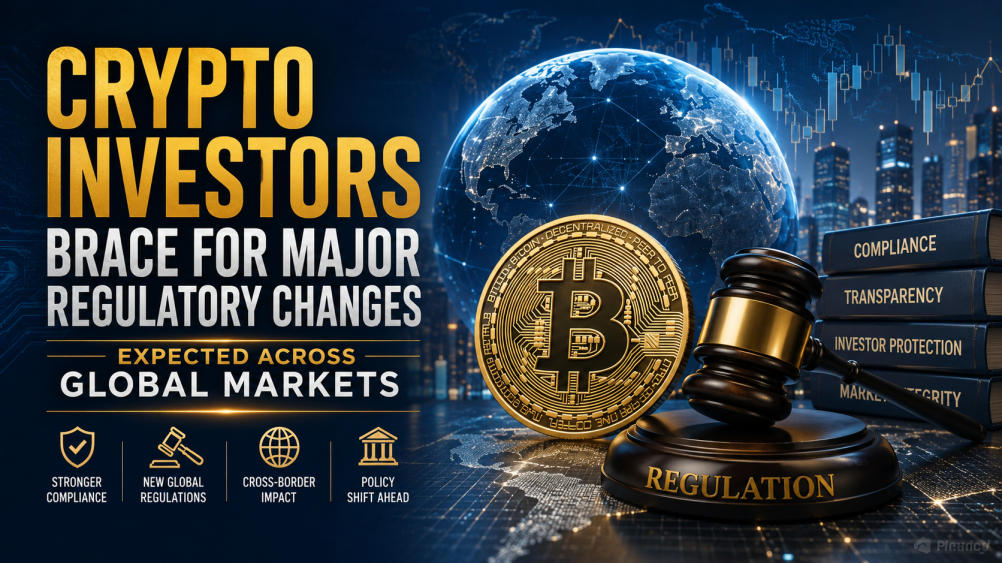
Can crypto investors still build long-term wealth when new rules are changing exchanges, stablecoins, and token trading worldwide?
That question now sits at the center of the crypto regulation 2026 debate. Governments are moving from warnings to rulebooks. The focus is on crypto exchanges, stablecoin issuers, tax reports, wallet checks, and cross-border transfers.
However, this shift is not only a threat. Clearer rules may reduce scams, weak reserves, and exchange failures. The next cycle may favor projects that can prove compliance, liquidity, reserves, and real user demand.
Why Rules Are Tightening Now
Regulators want crypto firms to act more like financial firms. In the European Union, the Markets in Crypto-Assets Regulation created rules for crypto-asset service providers and issuers. This made MiCA regulation a key model for digital asset regulation.
As a result, exchanges serving EU users face higher standards for authorization, custody, disclosures, and consumer protection. Stablecoin issuers also face rules tied to reserves and redemption rights. That matters because stablecoin regulation can affect trading pairs, payment rails, and liquidity across global crypto markets.
Meanwhile, anti-money laundering rules are getting tighter. The Financial Action Task Force backs the Travel Rule, which asks crypto service providers to share sender and receiver details for certain transfers.
Key Regulatory Areas Crypto Investors Should Watch
| Area | What may change | Why it matters |
| Stablecoins | More reserve checks and issuer licensing | Weak coins may lose support |
| Exchanges | More custody, listing, and disclosure rules | Safer platforms may gain trust |
| Tax | More data may reach tax agencies | Investors need cleaner records |
| AML compliance | More KYC checks and Travel Rule screening | Transfers may take longer |
| DeFi | More focus on websites, bridges, and token issuers | Some apps may limit access |
Tax is another pressure point. The OECD Crypto-Asset Reporting Framework gives tax authorities a model for sharing crypto account and transaction data across borders. In plain terms, crypto tax reporting is becoming harder to ignore.
In addition, United States investors already see digital assets listed in tax guidance from the IRS. Still, it shows that record-keeping is part of serious crypto investing.
Stablecoins, Bitcoin, Altcoins, and DeFi
Stablecoins may face the biggest test because they sit at the center of trading. Traders use them to enter markets, hold cash-like value, and move funds between exchanges. Because of this, regulators are looking closely at reserve quality, redemption promises, and issuer audits.
Bitcoin may face less direct issuer risk because it has no central company behind it. However, Bitcoin regulation still touches exchanges, ETFs, tax reports, custody firms, and payment providers.
Altcoins may face a harder test. Regulators often look at token sales, insider supply, marketing claims, and profit promises. Because of this, projects with weak disclosures or aggressive yield claims may face more delistings.
DeFi may also see pressure. Regulators may focus on websites, founders, bridges, and fiat onramps. As a result, DeFi regulation may shape which apps stay easy for retail investors to access.
How Careful Investors Can Prepare
Crypto investors do not need to panic. They need better habits. First, they should keep clear records of buys, sells, transfers, staking income, airdrops, and wallet addresses.
Second, they should check whether an exchange has clear licensing, custody details, proof of reserves, and withdrawal rules. In addition, investors should read stablecoin reserve reports before holding large balances.
Third, they should avoid projects that rely only on hype. Stronger cryptocurrency regulations may push weak tokens out of major markets. Projects with real revenue, clear token supply, active users, and honest risk warnings may stand in a better place.
A Careful Investor Has the Edge Now
Global crypto markets are entering a new phase. The core issue is no longer only price action. It is also about tax visibility, exchange safety, stablecoin reserves, and compliance risk.
Finally, investors who study the rules may react faster than those who only watch charts. Regulation will not remove crypto risk. However, it may separate stronger platforms from weaker ones, and that may shape the next market cycle.
Disclaimer: This article is for information only. It is not financial, tax, or legal advice. Crypto investors should speak with a qualified adviser before making decisions.
Post Disclaimer
The information provided on Financepdia.com is for educational and informational purposes only and should not be considered financial, investment, or trading advice. Cryptocurrency and financial markets are highly volatile and involve significant risk. Readers should conduct their own research (DYOR) and consult with a qualified financial advisor before making any investment decisions. Financepdia.com and its authors are not responsible for any financial losses resulting from actions taken based on the information provided on this website.