





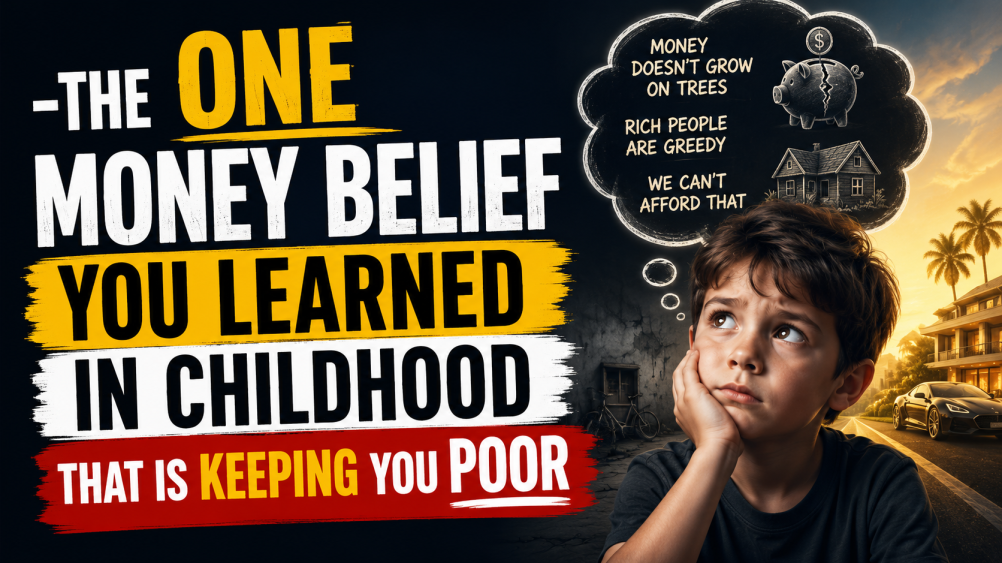
Maybe you grew up hearing, We cannot afford that. Maybe bills sat on the table like bad news. Maybe money caused silence, arguments, or fear in the house. As a child, you did not call it money stress. You just learned a rule: Money never stays, so why try?
That childhood money belief can feel normal. It can sound practical, even wise. But it quietly shapes how you spend, save, earn, and take chances. You may spend fast because money feels temporary. You may avoid saving because loss feels certain. You may stop asking for more because hope feels unsafe.
So here is the real question: What if poverty is not only about money? What if it is also about the story you learned about money? This article highlights that one belief, where it starts, and how to break it.
The Belief That Traps You
This belief usually starts before you understand money. You watch money come in, then vanish. It goes to bills, food, rent, school fees, debt, or emergencies. Nobody explains the plan. Nobody shows the budget. You only see stress.
So your mind builds a rule: Money is always leaving.
That rule can grow into other quiet beliefs. Saving feels pointless. Rich people feel different from you. Trying harder feels risky. Financial peace starts to look like something other people get.
The belief does not always sound dramatic. Sometimes it sounds like common sense. Every time we get money, something happens. People like us do not become wealthy. There is no point in saving. It will go anyway.
Then childhood thinking becomes adult behavior. You stop planning because planning feels useless. You spend quickly because money feels temporary. You avoid better chances because hope feels unsafe.
And the worst part is this: the belief keeps proving itself. Not because it is true. Because your choices keep obeying it.
Where the Fear Started
Children do not only learn from lectures. They learn from faces, tone, silence, panic, and behavior. They notice when adults whisper about bills. They feel the room change when rent is due. They remember the fight, even when nobody explains the money problem.
If money causes fights, you may avoid money talks now. If money is always scarce, you may feel guilty spending it on yourself. If success looks unreachable, you may stop asking for more before anyone says no.
That old fear can show up in quiet ways. You may avoid checking your bank account. You may spend it fast after payday. You may feel guilty for wanting better. You may stay in low-paying work because asking feels wrong. You may buy status items to feel accepted. You may help everyone else while ignoring your own needs.
You may think you are bad with money. You may only be loyal to an old fear.
This does not excuse poor choices. It explains where some choices begin. You can take responsibility without shaming yourself. You can name the pattern without hating your past.
The problem is not always that you lack discipline. The problem is that your nervous system learns that money means danger.
Why More Money Still Feels Like Less
More income does not always fix an old money story. If the belief stays, more money can create more pressure. A person may earn more and still feel broke. The numbers changed, but the fear stayed.
Here is how the cycle works:
- Money comes in.
- The old fear says, It will disappear.
- The person spends, avoids, gives, or panics.
- The money leaves.
- The belief feels true again.
This is how the pattern feeds itself. A person gets a raise. Instead of building stability, they upgrade everything fast. New clothes. Better phone. Bigger lifestyle. Then one emergency hits, and the money disappears. They say, Money never stays.
But the raise did not fail them. The old belief did.
Status can make this worse. Some people buy expensive things to prove they escaped poverty. They want the car, the clothes, the photos, the look. But the purchase keeps them tied to the same fear. They are still trying to prove safety from the outside.
Sometimes poverty follows people because their income changed, but their money story did not.
You cannot build wealth with a mind that expects loss.
The New Belief That Breaks the Pattern
The old belief says, Money never stays, so why try? The new belief says Money can stay when I give it a job.
This is not fake positivity. It is not pretending that money problems are easy. It is a practical shift. Money needs direction. It needs names, limits, and purpose. Without a job, money follows old habits.
That job can be simple. One part can go to an emergency fund. Another can go to debt payment. Rent can sit in its own account. Savings can have a clear goal. You can set money aside for learning, investment research, giving, and fun.
This matters because keeping money is a skill. It is not a personality trait. You are not born “good” or “bad” with money. You learn patterns. Then you practice better ones.
You do not need to become cold or greedy. You need to become responsible for your own peace.
Money does not need to control your mood anymore. It can support your choices instead.
The goal is not to worship money. The goal is to stop fearing it.
How to Rewrite the Money Story You Inherited
You cannot change a belief you refuse to name. Start there. Do not clean up the answer. Write the raw version.
Step 1: Name the Belief
Ask yourself, “What did childhood teach me about money?” Maybe it says, “Money is stressful.” Maybe it says, “People like us stay broke.” Maybe it says, “Wanting more is selfish.”
Step 2: Find the Source
Was it a parent’s fear? A family struggle? A season of poverty? A painful event? Your belief may have started as protection. But protection can become a prison.
Step 3: Question the Belief
Ask, “Is this true today, or was it true back then?” You may be living by a rule from a house you no longer live in.
Step 4: Build One New Habit
Keep it small. Track your spending. Save a small amount. Open your bank app. Negotiate one bill. Say no to one pressure purchase.
Step 5: Practice Without Shame
You will feel discomfort. That does not mean you are failing. It means you are acting differently.
Your childhood may have written your first money story. It does not get to write the last one.
Final Takeaway
The money beliefs keeping you poor may not be laziness. It may be an old survival rule. Maybe it once helped you feel prepared, careful, or protected. But now it may keep you small, scared, and stuck.
Once you see the belief, you can question it. Once you question it, you can choose differently. Start with one small action. Save a little. Check your account. Say no once.
Your past may explain your money story. It does not have to control it.
Disclaimer: This article is for informational purposes only and is not financial, legal, or credit advice. Always read lender terms carefully and consult a qualified advisor before applying.
Post Disclaimer
The information provided on Financepdia.com is for educational and informational purposes only and should not be considered financial, investment, or trading advice. Cryptocurrency and financial markets are highly volatile and involve significant risk. Readers should conduct their own research (DYOR) and consult with a qualified financial advisor before making any investment decisions. Financepdia.com and its authors are not responsible for any financial losses resulting from actions taken based on the information provided on this website.