




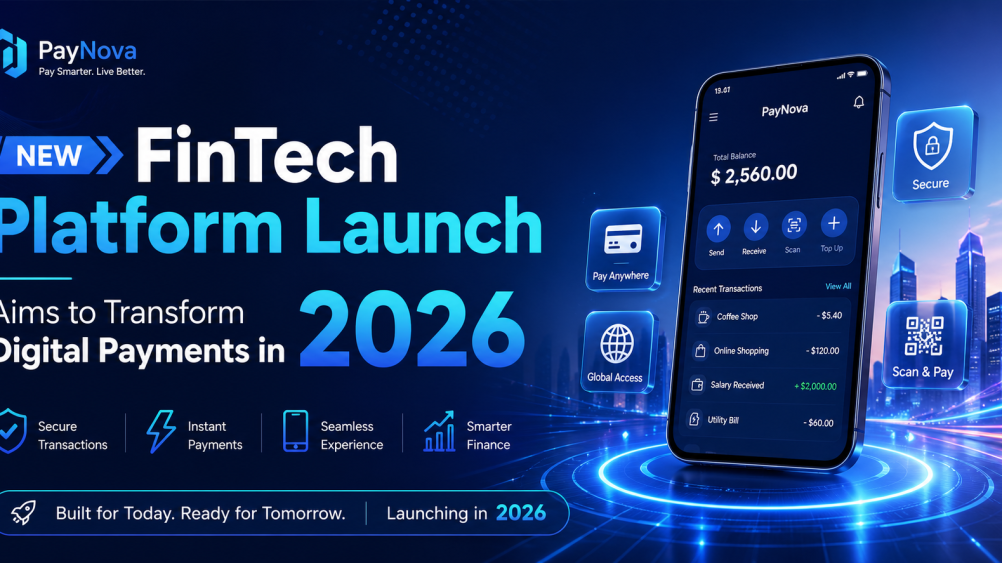
Can a new payment platform finally make crypto useful for daily spending without the fear of high fees, slow transfers, or failed checkout?
That question matters more in 2026 than ever. Many crypto users still like the idea of paying with digital assets. Yet many of them do not trust the process enough for daily use. They worry about price swings, delays, wallet friction, and weak merchant support. As a result, digital payments still need a better bridge between crypto and real-world spending.
A new fintech platform launch fills that gap at the right time. The platform’s pitch is simple. It wants to combine stablecoin payments, real-time payments, digital wallet access, and stronger payment security in one system. That matters because the market is already moving in this direction. According to Worldpay’s Global Payments Report, digital payment methods such as wallets, account-to-account payments, buy now pay later, and crypto rose from 34% to 66% of global e-commerce value between 2014 and 2024. In physical stores, they climbed from 3% to 38% over the same period.
Why This Launch Fits the 2026 Market
The timing looks strong. Digital payments are no longer a side option. They are becoming the main option in many markets. Meanwhile, faster payment rails are gaining ground, and users now expect money to move in seconds, not days. The Federal Reserve’s FedNow service also shows how the industry is pushing near real-time money movement around the clock.
For the crypto audience, one shift stands out most. Stablecoin payments are moving closer to everyday commerce. In March 2026, Visa said it was expanding work with Bridge to support stablecoin-linked cards in more than 100 countries. Visa said those cards can let users spend from stablecoin balances at 175 million plus merchant locations. That is a major signal. It shows that blockchain payments are slowly moving from trading screens to checkout pages and store counters.
What the New Fintech Platform Is Trying to Fix
Many crypto payment tools still break at the same points. They are either too technical for new users or too limited for merchants. Therefore, a platform that wins in 2026 must solve both sides of the payment flow.
For users, that means:
- fast checkout
- clear fees
- stablecoin support
- easy wallet connection
- low failed payment risk
For businesses, that means:
- merchant settlement options
- cross-border payments
- fraud controls
- simple integration
- better conversion at checkout
That is why this launch matters. It is not only about another crypto app. It is about making digital payments 2026 feel normal, safe, and useful.
Key Features That Could Drive Adoption
| Feature | Why It Matters in 2026 | Value for Crypto Users and Merchants |
| Stablecoin payments | Cuts exposure to sharp token price moves | Better daily spending and merchant acceptance |
| Real-time payments | Reduces wait times and failed cash flow planning | Faster settlement and smoother checkout |
| Digital wallet support | Matches how users already pay online | Less friction at checkout |
| Cross-border payments | Global commerce still suffers from delays and fees | Lower cost and faster reach |
| Payment security tools | Fraud remains a major problem | More trust for both sides |
The need for this setup is supported by wider market data. BCG’s 2025 Global Payments Report said real-time account-to-account volumes were up 40% globally in 2024, and countries like India and Brazil already passed 50% in transaction share for that payment style.
Why the Crypto Audience May Pay Attention
Crypto users do not only want the next coin. Many of them now want real use cases. However, utility matters more than hype in this phase of the market. A fintech platform that turns stablecoins into a practical payment tool can speak to both beginners and long-term holders.
That is also why this topic has strong search value right now. Readers are looking for terms such as digital payments, crypto payments, stablecoin payments, cross-border payments, real-time payments, digital wallet, merchant adoption, and payment security. These phrases match what the market is already discussing in reports and product launches. For example, Stripe’s 2025 company update said stablecoin payments volume doubled to about $400 billion in 2025, with much of that tied to B2B payments.
What Could Hold the Platform Back
The opportunity is real, but the path is not easy. Trust still matters. Regulation still matters. User experience matters even more.
First, regulation can shift fast. A platform working with crypto rails must stay aligned with payment rules in many regions. Second, merchants will not switch unless the savings are clear. Cheap headlines are not enough. The product has to cut failed payments, lower costs, or lift conversion. Third, users will leave if checkout feels hard. Even a strong back-end system can fail if the front-end is confusing.
Fraud is another risk. The Merchant Risk Council’s 2026 report release said merchants are closely watching real-time payments, tokenization, and new fraud threats in the current market. That means any new platform must treat risk control as a core feature, not a side feature.
Why This Launch Could Matter More Than the Next Token Pump
A token rally can grab attention for a week. A working payment product can hold value for years. That is the bigger point behind this new fintech platform launch.
If the platform can make stablecoin payments simple, support real-time payments, and help merchants accept crypto-linked funds with less risk, it could become one of the more useful product stories of 2026. In that case, digital payments may move one step closer to everyday crypto use, not just exchange activity.
That is why this launch deserves attention. It sits at the center of where the market is going: faster money movement, stronger wallet use, wider merchant support, and practical blockchain payments. So, for readers watching the next phase of crypto, this is not just another product release. It is a signal of where digital commerce may be heading next.
Disclaimer: This article is for general information only. It is not financial, legal, or investment advice. Readers should do their own research before making any payment or crypto decision.
Post Disclaimer
The information provided on Financepdia.com is for educational and informational purposes only and should not be considered financial, investment, or trading advice. Cryptocurrency and financial markets are highly volatile and involve significant risk. Readers should conduct their own research (DYOR) and consult with a qualified financial advisor before making any investment decisions. Financepdia.com and its authors are not responsible for any financial losses resulting from actions taken based on the information provided on this website.