






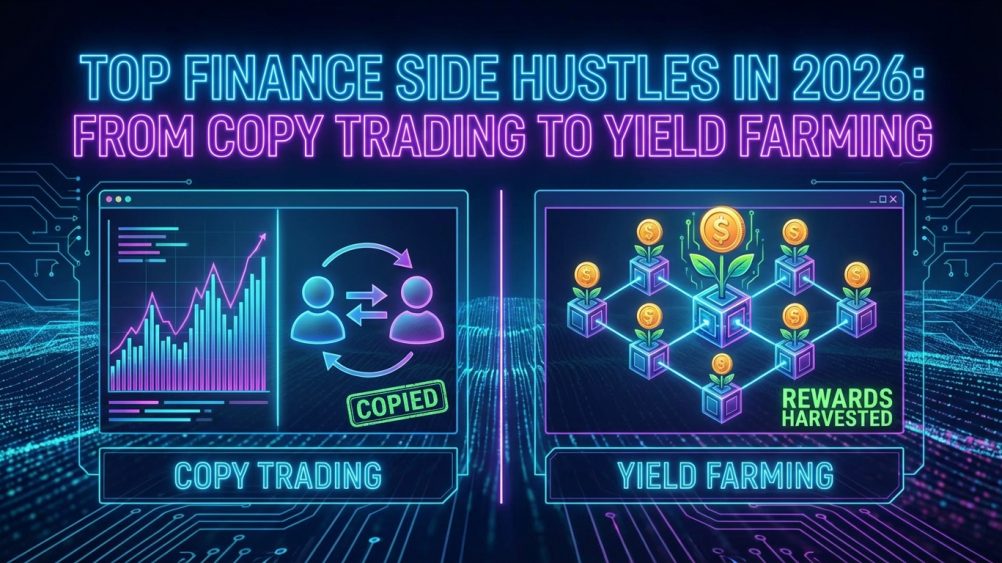
Top Finance Side Hustles in 2026: From Copy Trading to Yield Farming

Top Finance Side Hustles in 2026: From Copy Trading to Yield Farming

Have you ever looked at your paycheck and thought: There has to be more?

Most people work one job. One income stream. One safety net. But in 2026, that model feels fragile. Inflation is sticky. Prices keep rising. Here is the good news. The tools to earn extra income have never been more accessible. You just need the right starting point.

This guide walks you through the best finance side hustles in 2026. Each method is real, trackable, and open to everyday people today.

Key Takeaways

  • Copy trading lets beginners follow experts automatically: eToro’s CopyTrader requires a minimum of $200 to start and charges no management fees on copied trades.
  • Over $100 billion in ETH is actively staked: By November 2025, over 33 million ETH tokens worth roughly $100 billion were staked, showing how mainstream this income stream has become.
  • DeFi has $192 billion locked in platforms: Yield farming taps into this pool, with top stablecoin pools offering returns far above traditional savings rates.
  • Crypto affiliate programs pay with zero capital required: Platforms like Binance, Coinbase, and Bybit pay commissions when your referrals sign up or trade.
  • All these strategies carry real risk: Past returns are not guaranteed. Never invest more than you are ready to lose.

Start Here: What Is Copy Trading?

Copy trading is exactly what it sounds like. You pick a skilled trader and mirror their moves automatically. Every time they buy or sell, your account does the same thing.

eToro pioneered this model with their CopyTrader tool. You can browse thousands of investors and copy up to 100 at once. The minimum to start is $200 per trader.

Top eToro Popular Investors have delivered annual returns above 30% over multiple years. One investor named Harpinder Kang returned 225% in 2020 and 43% in 2021. He closed around 68% of his trades at a profit. Those are not typical results. But they show the ceiling of what is possible.

The platform charges no management fees for copying. You pay only standard market spreads. Compare that to a traditional fund manager charging 1% to 2% per year.

One honest caution: past performance is not a guarantee. Choose traders with at least two to three years of consistent returns. Avoid copying anyone with high leverage or a wildly concentrated portfolio.

Next Step Up: Staking Your Crypto

Staking is one of the simplest ways to earn from crypto. You lock tokens in a blockchain network and earn rewards for helping validate them. Think of it like earning interest on a savings account, but with crypto.

Popular staking coins include ETH, SOL, and DOT. Platforms like Lido offer liquid staking. You earn staking rewards and keep access to your tokens. Earlier staking models locked your funds with no flexibility.

Stablecoin lending on Aave or Compound can offer 8% to 15% APY. That range beats most traditional savings products by a significant margin.

The High-Upside Play: Yield Farming

Yield farming takes things a step further. Instead of just locking tokens, you deposit pairs of assets into a liquidity pool. These pools power decentralized exchanges like Uniswap. When someone swaps tokens in your pool, you earn a share of the fee.

That market runs on people like you supplying the liquidity DeFi needs. Right now, $192 billion is locked in DeFi platforms. That is a massive, functioning economy.

High-potential pools can offer APYs above 100% in newer protocols. But those numbers come with real risks. Rewards drop as more capital enters. Prices shift and reduce actual returns. Smart contract bugs can drain funds fast.

Here are the top yield farming platforms in 2026:

  • Uniswap: The DeFi pioneer. Concentrated liquidity lets providers earn more from the same capital.
  • Curve Finance: Specialized in stablecoins. Holds $2.73 billion in TVL and earns $38.99 million in annual fees.
  • Aave: Leads DeFi lending with $40 billion TVL, paying 4% to 7% on stablecoins.
  • Pendle: Separates principal from yield. Lock in a fixed return rate or trade future yields as a separate asset.
  • Lido: Stacks staking rewards with DeFi access using liquid derivatives like stETH.

Yield farming is not truly passive. Monitor positions, understand impermanent loss, and track market conditions.

Side Hustle With Zero Capital: Crypto Affiliate Marketing

Crypto affiliate marketing is one of the lowest-barrier options available. You promote trusted exchanges using a referral link. When someone signs up or trades, you earn a commission.

Top programs include Binance Affiliate, Coinbase, Bybit, Ledger, and Crypto.com. The earning potential scales directly with your audience size.

Even a small audience can generate steady monthly commissions over time. No trading skill required. No capital at risk.

Compare All Five Side Hustles at a Glance


Strategy Skill Level Capital Needed Risk Level Potential Return
Copy Trading Beginner From $200 Medium Varies by trader
Staking Beginner Any amount Low to Medium 4% to 15% APY
Yield Farming Intermediate Flexible Medium to High Up to 100%+ APY
Crypto Affiliate Beginner None Very Low Commission-based
Play-to-Earn Beginner Minimal Medium Varies by game


Sources: eToro, Nasdaq Passive Income Guide, CoinSpeaker

Play-to-Earn: The Wild Card Income Stream

Web3 games pay players in tokens and NFTs for completing tasks or winning battles. These assets can be traded on supported marketplaces for real money.

Earning potential varies widely. Research tokenomics and community activity before committing time.

What to Check Before You Start Any of These

The excitement around extra income is real. But every strategy here carries risk. Here are the things every beginner should confirm before starting.

Know your risk tolerance first. Copy trading and staking are relatively structured. Yield farming and play-to-earn carry more variable outcomes. Match the strategy to your current comfort level.

Diversify across strategies. Even top traders have losing months. Even blue-chip DeFi protocols have been exploited.

Staking rewards, farming gains, and trading profits are taxable in most jurisdictions. Track your earnings from day one. Tax surprises are painful.

Start small. Most platforms allow you to begin with $50 to $200. Test the strategy before scaling up.

FAQs

Q: How is copy trading different from investing in a mutual fund?

A mutual fund pools your money and is actively managed by a professional. You pay management fees regardless of performance. Copy trading lets you directly mirror specific investors with no management fee. You also stay in full control and can stop copying at any time. Mutual funds are regulated investment vehicles. Copy trading is a self-directed strategy with no external oversight.

Q: Can you lose money yield farming even if the APY looks high?

Yes. High APY numbers can shrink fast once more liquidity enters the pool. You can also experience impermanent loss when your deposited token prices shift. One token falling in price can leave your position worth less than holding both. Always calculate the real return after fees and impermanent loss before committing.

Q: Is staking safer than yield farming for beginners?

Generally yes. Staking involves locking assets with a blockchain network and earning predictable rewards. Yield farming involves more variables: pool fees, token volatility, protocol risk, and impermanent loss. Liquid staking on platforms like Lido gives you staking rewards while keeping flexibility. Most beginners are better served starting with staking before moving into yield farming.

Disclaimer: This article is for informational purposes only. It is not financial advice. Always do your own research.


Post Disclaimer

The information provided on Financepdia.com is for educational and informational purposes only and should not be considered financial, investment, or trading advice. Cryptocurrency and financial markets are highly volatile and involve significant risk. Readers should conduct their own research (DYOR) and consult with a qualified financial advisor before making any investment decisions. Financepdia.com and its authors are not responsible for any financial losses resulting from actions taken based on the information provided on this website.
Why Liquidity Matters: Hidden Factor That Can Make or Break Your Trade 

Why Liquidity Matters: Hidden Factor That Can Make or Break Your Trade 

Are you losing money on crypto trades without understanding why? In May 2021, a trader bought $50,000 worth of a small-cap altcoin. The order filled at 8% higher than the displayed price.

Within minutes, the loss totaled $4,000 before the market even moved. This wasn’t market volatility. It was a liquidity problem. 

Most new crypto investors don’t realize that liquidity can silently destroy profits faster than any price crash.

Key Takeaways

  • Low liquidity causes instant slippage losses
  • Slippage costs 0.5% to 5% per trade
  • Thin order books enable price manipulation

What Liquidity Actually Means in Crypto Trading

Liquidity measures how easily you can buy or sell an asset without moving its price.

High liquidity means many buyers and sellers exist at similar price points. Your order fills quickly at the expected price. Low liquidity means fewer participants and wider price gaps. Your order moves the market simply by existing.

Think of liquidity like a swimming pool. A deep pool lets you dive without hitting the bottom. A shallow pool causes instant impact. In crypto, the “depth” is measured by order book size.

The order book shows all pending buy and sell orders. Deep order books have many orders clustered near the current price. Shallow order books have few orders with large price gaps between them.

Bitcoin and Ethereum typically maintain deep liquidity on major exchanges. Daily Bitcoin trading volume exceeds $30 billion across global markets. Small-cap tokens often trade under $100,000 daily, creating severe liquidity constraints.

How Slippage Drains Your Trading Account

Slippage is the difference between expected price and execution price.

You click buy at $1.00. Your order fills at $1.03. That 3% gap is slippage. It happens because your order consumes available liquidity at each price level.

Market orders guarantee execution but not price. They match against existing orders in the book. If the order book is thin, your trade walks up the price ladder. Each step costs more than the last.

Limit orders set a maximum price but don’t guarantee execution. The market might move away before your order fills. You avoid slippage but risk missing the trade entirely.

Consider this scenario. You want to buy $10,000 of Token X. The order book shows:

  • 100 tokens at $1.00
  • 200 tokens at $1.02
  • 500 tokens at $1.05
  • 1,000 tokens at $1.10

Your $10,000 order needs roughly 9,500 tokens at $1.00. The book only offers 100 at that price. Your order climbs through each level. Average fill price reaches $1.08. You just paid 8% more than expected.

Academic research indicates that slippage costs increase exponentially as order size grows relative to available liquidity.

The Stop Hunt Problem in Thin Markets

Stop-loss orders become visible targets in low liquidity environments.

Stop hunts occur when large traders deliberately push prices to trigger clusters of stop orders. Once triggered, those orders become market orders that push prices even further. The manipulator profits from both the initial push and the cascade.

Here’s how it works:

  1. A large trader identifies where retail stop orders concentrate
  2. They place orders to push price toward those stops
  3. Stops trigger and convert to market orders
  4. The cascade drives price further in the same direction
  5. The manipulator closes their position at profit
  6. Price often rebounds after the hunt completes

Thin order books make this strategy cheaper to execute. Moving Bitcoin’s price requires millions of dollars. Moving a small-cap token might cost only thousands.

Decentralized exchanges often show worse liquidity than centralized platforms. Automated market makers use bonding curves instead of order books. Large trades against these curves suffer significant price impact regardless of timing.

Comparing Liquidity Across Market Conditions

Different market structures create vastly different liquidity profiles.

Market Type Typical Spread Order Book Depth Slippage Risk Manipulation Risk
Major CEX (BTC/ETH) 0.01% – 0.05% Very High Very Low Very Low
Major CEX (Mid-caps) 0.1% – 0.5% Moderate Low Low
Minor CEX (Small-caps) 0.5% – 2% Low High Moderate
DEX (Major pairs) 0.3% – 1% Moderate Moderate Low
DEX (New tokens) 2% – 10%+ Very Low Very High High

The spread represents the gap between best bid and best ask prices. Tighter spreads indicate better liquidity. Wider spreads signal liquidity problems.

Centralized exchanges aggregate liquidity from professional market makers. These firms continuously quote buy and sell prices. Their algorithms adjust quotes based on inventory and market conditions.

Decentralized platforms rely on liquidity providers depositing token pairs. Incentives attract providers but don’t guarantee depth. A pool might have $1 million in total value but poor execution for $10,000 trades.

Five Factors That Affect Trading Liquidity

Understanding what drives liquidity helps you avoid costly mistakes.

Trading volume patterns: High volume suggests active trading but doesn’t guarantee tight spreads. Volume might concentrate in large block trades rather than continuous market making.

Time of day effects: Cryptocurrency markets show clear patterns tied to global time zones. Liquidity peaks when US, European, and Asian markets overlap. It drops significantly during off-hours.

Market maker presence: Professional market makers provide the majority of liquidity on centralized exchanges. Their participation depends on volatility, fees, and competition. Aggressive market conditions can cause them to withdraw.

Token economics: Tokens with large holder concentration show poor liquidity. If 80% of supply sits in inactive wallets, only 20% trades actively. This creates artificial scarcity and price manipulation opportunities.

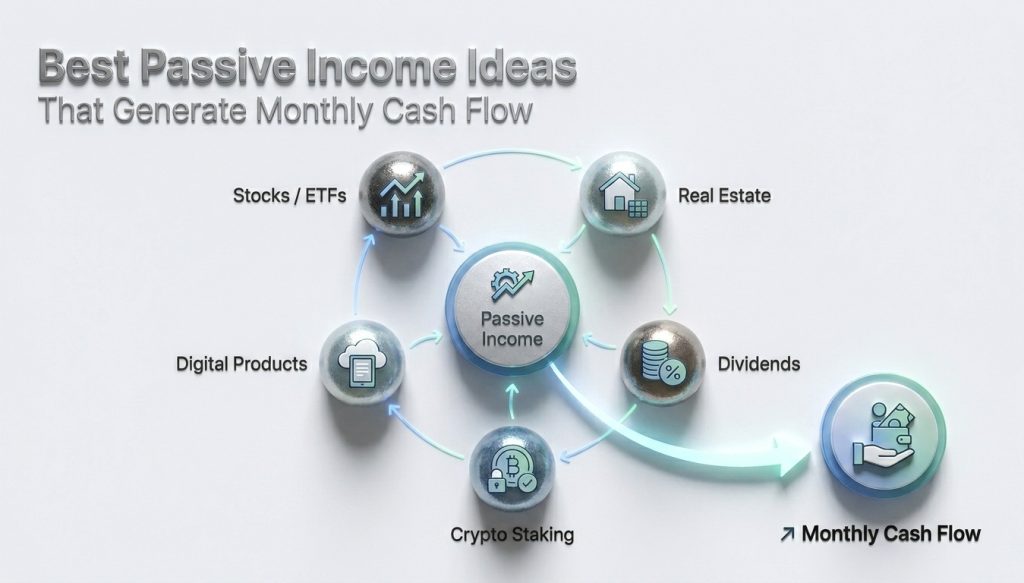
Check out the example of token economics in the image below.

Exchange listing count: Tokens listed on multiple major exchanges distribute liquidity across platforms. This typically improves overall market quality. Single-exchange tokens concentrate risk and manipulation potential.

Protecting Yourself from Liquidity Problems

Smart traders adjust strategy based on liquidity conditions.

Start by checking order book depth before placing orders. Most exchanges show this data visually. Look for clustering near the current price. Avoid tokens where the order book shows large price gaps.

Use limit orders for anything except urgent trades. Market orders in thin markets guarantee slippage. Limit orders let you set maximum acceptable prices. You might miss some trades but avoid catastrophic fills.

Split large orders across time and price levels. Dumping $50,000 into a thin market causes maximum slippage. Breaking it into ten $5,000 orders over several hours reduces market impact.

Monitor spread percentages before trading. If the bid-ask spread exceeds 0.5%, consider waiting for better conditions. Spreads above 2% indicate serious liquidity problems.

Avoid trading during low-volume hours unless necessary. Check historical volume patterns for your target asset. Schedule trades during peak liquidity windows when possible.

Consider the total order book depth relative to your position size. If you’re trading 10% or more of available depth, expect significant slippage. Reduce position size or choose more liquid alternatives.

Frequently Asked Question

What’s the difference between liquidity and volume in crypto markets?

Volume measures total trading activity over time. Liquidity measures how easily you can trade without affecting price. A token can have high volume from a few large trades but terrible liquidity for average traders. Order book depth and spread width indicate true liquidity better than volume alone.

Can decentralized exchanges ever match centralized exchange liquidity?

DEX liquidity has improved significantly through concentrated liquidity pools and cross-chain aggregation. However, professional market makers still prefer centralized platforms for most serious liquidity provision. DEXs excel at long-tail assets and censorship resistance. They typically lag on execution quality for large trades compared to major centralized venues.

How does liquidity affect stop-loss strategy effectiveness?

Stop-losses work best in highly liquid markets where execution happens near trigger prices. In thin markets, stop orders can execute far below trigger levels during rapid moves. This defeats their protective purpose. Wide stop placement and smaller position sizes work better than tight stops in low liquidity environments. Some traders avoid stops entirely in illiquid markets.

Disclaimer: This article is for informational purposes only. It is not financial advice. Always do your own research.


Post Disclaimer

The information provided on Financepdia.com is for educational and informational purposes only and should not be considered financial, investment, or trading advice. Cryptocurrency and financial markets are highly volatile and involve significant risk. Readers should conduct their own research (DYOR) and consult with a qualified financial advisor before making any investment decisions. Financepdia.com and its authors are not responsible for any financial losses resulting from actions taken based on the information provided on this website.

How to Build a Long-Term Investment Plan in a High-Inflation World

How to Build a Long-Term Investment Plan in a High-Inflation World

Is hard-earned money losing value faster than it grows in today’s inflation-heavy economy?

Many investors now face this exact concern. Prices rise, savings shrink, and uncertainty grows around traditional investing. This is why many turn toward crypto investing strategies and diversified portfolios to stay ahead.

However, building a long-term investment plan in such an environment requires more than chasing trends. It demands discipline, clarity, and smart allocation. Moreover, investors must focus on stability while still aiming for growth. Therefore, a structured approach becomes essential.

Understand Inflation and Its Impact on Investments

Inflation reduces the purchasing power of money over time. As a result, holding idle cash becomes risky. According to data from the , even moderate inflation can erode value significantly over years.

In addition, traditional low-yield assets often fail to keep pace. This is where inflation-resistant assets like crypto, commodities, and equities come into play. Therefore, investors must shift focus toward assets with growth potential.

Set Clear Long-Term Investment Goals

A strong plan starts with clear goals. Investors should define timelines, risk tolerance, and expected returns. For example, someone investing for 10 years will take different steps than someone planning for retirement in 30 years.

Moreover, clear goals help avoid emotional decisions. In volatile markets like crypto, this becomes even more important. Therefore, consistency matters more than short-term gains.

Diversify Across Asset Classes

Diversification remains one of the most effective ways to reduce risk. A balanced portfolio spreads investments across multiple assets.

Below is a simple allocation example:


Asset Class Purpose Example Allocation
Crypto Assets High growth potential 20%
Stocks (Equities) Long-term capital growth 40%
Commodities Hedge against inflation 15%
Bonds Stability and income 15%
Cash Reserves Liquidity for opportunities 10%

However, allocation depends on risk tolerance. A younger investor may hold more crypto assets, while a conservative investor may prefer bonds. Therefore, balance is key.

Focus on Strong Crypto Fundamentals

Crypto plays a growing role in modern portfolios. However, not all projects hold long-term value. Investors should focus on:

  • Blockchain utility
  • Real-world use cases
  • Strong developer activity
  • Transparent tokenomics

For instance, platforms like show how smart contracts support real applications. In addition, Bitcoin remains a popular store of value due to its limited supply.

Therefore, careful selection helps reduce unnecessary risk.

Use Dollar-Cost Averaging Strategy

Timing the market is difficult. Instead, many investors follow dollar-cost averaging (DCA). This means investing a fixed amount at regular intervals.

As a result, investors avoid buying only at market peaks. Over time, this method smooths out volatility. Moreover, it builds discipline and reduces emotional trading.

Therefore, DCA works well for both beginners and experienced investors.

Rebalance the Portfolio Regularly

Market conditions change frequently. As a result, portfolio allocations shift over time. For example, a strong crypto rally may increase exposure beyond the intended level.

Therefore, periodic rebalancing is important. Investors should review portfolios every few months. This helps maintain the desired risk level and protects gains.

In addition, rebalancing prevents overexposure to volatile assets.

Manage Risk with Clear Rules

Every investment carries risk. However, managing it properly makes a major difference. Investors should:

  • Set stop-loss levels
  • Avoid over-investing in a single asset
  • Keep an emergency fund

Moreover, emotional decisions often lead to losses. Therefore, predefined rules help maintain control during market swings.

Stay Informed but Avoid Noise

The crypto space moves fast. News, trends, and opinions flood the market daily. However, not all information is reliable.

Investors should rely on credible sources for market data. In addition, long-term trends matter more than short-term hype.

Therefore, filtering information becomes a valuable skill.

Think Long Term, Not Short Term

Short-term trading often leads to stress and poor decisions. In contrast, long-term investing builds wealth steadily.

For example, historical data shows that holding assets like Bitcoin over longer periods has delivered strong returns despite volatility. However, patience is required.

Therefore, staying committed to the plan becomes essential.

Build Stability in an Uncertain World

A strong long-term investment plan in a high-inflation world focuses on balance, discipline, and informed decisions. Investors who stay consistent and avoid panic tend to perform better over time.

Moreover, combining crypto investing strategies, diversification, and risk control creates a more stable path forward. Therefore, the goal is not quick profits but steady progress.

In the end, a clear plan brings confidence even in uncertain markets.

Disclaimer: This article is for informational purposes only and does not constitute financial advice. Investors should conduct their own research and consult a financial advisor before making investment decisions.


Post Disclaimer

The information provided on Financepdia.com is for educational and informational purposes only and should not be considered financial, investment, or trading advice. Cryptocurrency and financial markets are highly volatile and involve significant risk. Readers should conduct their own research (DYOR) and consult with a qualified financial advisor before making any investment decisions. Financepdia.com and its authors are not responsible for any financial losses resulting from actions taken based on the information provided on this website.