





That question is now at the center of the stablecoins debate. Many crypto users see USDT and USDC as a fast way to move money, save in dollars, and avoid local currency pain. However, central banks and global watchdogs are sounding the alarm. They warn that heavy use of dollar-backed stablecoins could weaken local currencies, speed up capital flight, and reduce a country’s control over its own money system.
The concern is serious. Yet the full picture is more complicated. In many emerging markets, people do not buy stablecoins for speculation first. They buy them because local inflation is high, banking access is weak, and sending money across borders is still slow and costly. Stablecoins may create new risks, but they are also solving old failures that governments and banks have not fixed.
Why Regulators Are Worried
The main fear is dollarization. When people in weaker economies shift savings and payments into US dollar stablecoins, local currency demand can fall. That can make the exchange rate pressure worse. It can also weaken the power of central banks to guide credit, inflation, and liquidity within the country. The BIS says wider use of foreign currency stablecoins can raise concerns about monetary sovereignty and weaken the effect of foreign exchange rules.
There is also the issue of capital flow volatility. If people can move value into stablecoins and send it abroad at any hour, money can leave faster during a crisis. That matters a lot in economies with thin reserves and fragile confidence. The FSB warned that foreign currency stablecoins in emerging market and developing economies can increase financial stability risks by destabilizing flows and putting strain on fiscal resources.
Still, the threat is not only macroeconomic. There is also market structure risk. If a major stablecoin loses its peg, freezes redemptions, or faces legal pressure, users in weaker economies can be hit harder because they often hold stablecoins as a savings tool, not just as trading collateral. The memory of TerraUSD still hangs over the sector, even though algorithmic models are different from reserve-backed coins. Goldman Sachs
Why users in emerging markets still keep buying stablecoins
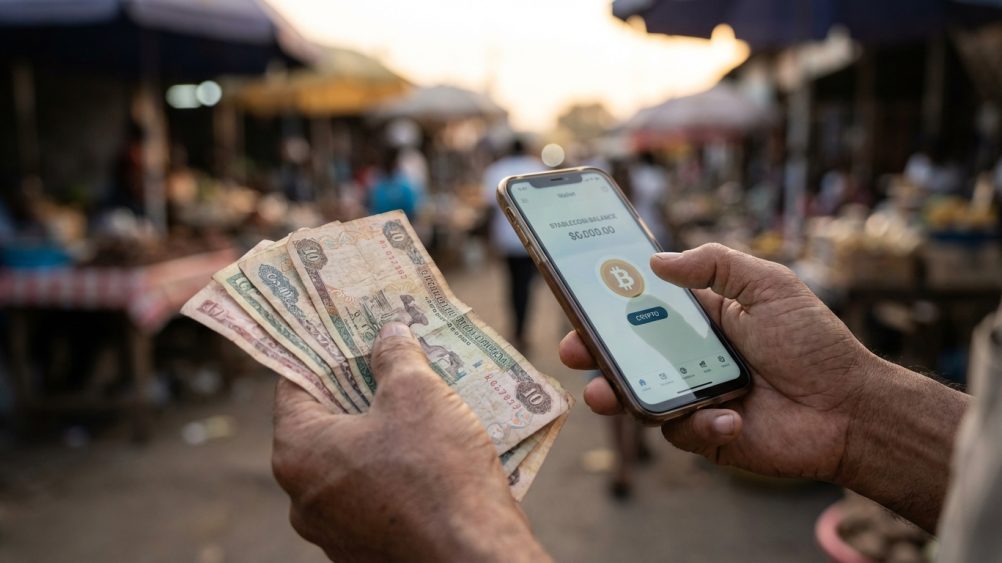
The simple answer is that stablecoins often work better than the local options. In many regions, people face currency volatility, strict capital controls, slow bank transfers, and limited access to real dollar accounts. A phone wallet with USDT can feel safer than a local bank account that loses value every month. Goldman Sachs notes that stablecoins can offer immediate access to dollars for users who do not have access to US bank accounts, and says remittances are one of the strongest use cases in emerging markets.
That demand is visible on the ground. Chainalysis reported that in parts of Latin America, stablecoin purchases made up more than half of exchange purchases for major local currencies during the period it studied. It linked that pattern to inflation, currency swings, and the search for dollar-linked savings and payments.
Moreover, remittances remain expensive in many corridors. The World Bank found that the average cost of sending $500 in Q1 2025 was 3.66% across the tracked G20 markets, while digital-only money transfer operators averaged 3.55%. That is better than older bank rails, but still meaningful for families sending money often. This is why stablecoin payments keep gaining attention.
What The Data Suggests
| Issue | Why it matters in emerging markets | What current sources say |
| Dollarization | Local currency use may fall | The BIS warns that foreign currency stablecoins can weaken monetary sovereignty and FX rules. |
| Capital flight | Money can leave fast during panic | The FSB says stablecoins can destabilize financial flows in EMDEs. |
| Remittances | Families need cheaper transfers | Goldman Sachs and the World Bank show strong remittance demand and ongoing fee pressure. |
| Inflation hedge | Households seek dollar safety | Chainalysis links strong stablecoin use in Latin America to inflation and currency weakness. |
| System risk | A depeg or issuer problem can spread quickly | The BIS says stablecoins perform poorly as the base of a monetary system. |
So, Are Stablecoins Really Destabilizing Emerging Markets?
The honest answer is sometimes, but not by default. Stablecoins can add pressure to weak economies. They can speed up unofficial dollarization. They can weaken policy tools. They can make cross-border leakages harder to track. In a panic, they can act like a digital exit door. IMF
However, blaming stablecoins alone misses the deeper problem. People usually run to digital dollars when local systems are already failing them. High inflation, weak banking access, transfer delays, and loss of trust come first. Stablecoins often arrive as the symptom, not the root cause. That does not make them harmless. It means the debate should focus less on panic and more on rules, reserves, audits, redemption standards, and local payment reform.
The Real Fault Line Ahead
The real question is not whether stablecoins are good or bad. The real question is who controls money when trust in local systems breaks down. In emerging markets, that answer now matters more than ever. If governments respond with smarter rules and better payment rails, stablecoins may stay a useful side tool. If they do nothing, US dollar stablecoins could become the unofficial savings account for millions, and that would change the balance of power in finance far beyond crypto.
Disclaimer: This article is for informational purposes only and does not provide financial, legal, or investment advice. Crypto assets, including stablecoins, carry market, regulatory, and counterparty risk.
Post Disclaimer
The information provided on Financepdia.com is for educational and informational purposes only and should not be considered financial, investment, or trading advice. Cryptocurrency and financial markets are highly volatile and involve significant risk. Readers should conduct their own research (DYOR) and consult with a qualified financial advisor before making any investment decisions. Financepdia.com and its authors are not responsible for any financial losses resulting from actions taken based on the information provided on this website.