





Can a trader still make money in crypto even when many trades lose? That is one of the biggest fears in the market today. Many beginners think they must win most of the time to stay profitable. However, trading does not work that way. In many cases, a trader can lose often and still come out ahead if the size of the average win is larger than the size of the average loss.
That is where the risk-reward ratio becomes important. It gives a trader a clear way to judge whether a trade idea makes sense before money is put at risk. So, instead of chasing random entries, the trader measures the possible loss, the possible gain, and the balance between both sides. This is why risk reward ratio in trading is such an important part of crypto risk management.
What Is the Risk-Reward Ratio?
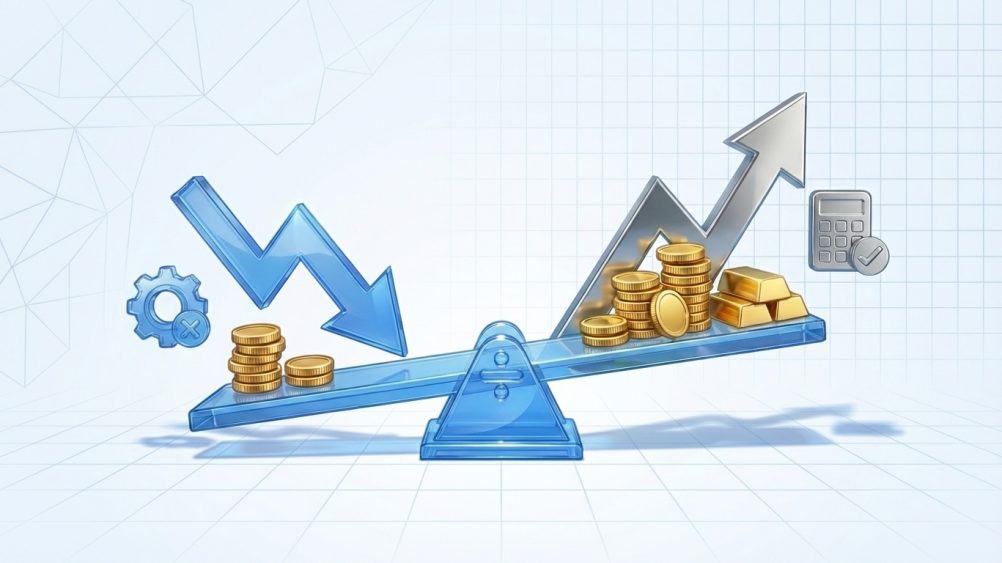
The risk-reward ratio compares the money a trader could lose with the money they could make on one trade. If a trader risks $100 to make $300, the ratio is 1:3. In simple terms, that means the trader is risking one unit to try to make three units. IG and SoFi both explain the ratio in this same basic way.
This metric matters because a good trading result is not only about being right often. It is also about how much is won when the trade works and how much is lost when it fails. So, a trader with a lower win rate can still build positive results if the payoff on winners stays larger than the damage from losers.
How to Calculate Risk-Reward Ratio
The math is simple. A trader needs three numbers:
- Entry price
- Stop-loss
- Take-profit
First, the trader finds the risk. That is the distance from the entry to the stop-loss. Next, the trader finds the reward. That is the distance from the entry to the take-profit target. Then, the trader compares the two. Stop-loss orders cap downside risk, while take-profit orders mark the planned exit for gains.
Formula:
Risk-Reward Ratio = Potential Loss ÷ Potential Profit
For example, a trader buys BTC at $70,000. They place a stop-loss at $68,000 and a take-profit at $76,000.
- Risk: $70,000 minus $68,000 = $2,000
- Reward: $76,000 minus $70,000 = $6,000
- Ratio: $2,000 ÷ $6,000 = 1:3
So, the trade risks one part to target three parts. As a result, the setup gives the trader more room for profit than loss, at least on paper.
Why Winning Trades Are Not Only About Win Rate
Many crypto traders focus too much on win rate. That can be a mistake. A high win rate looks good, but it means little if losses are much bigger than wins. TradeDay gives a clear example of this problem. A trader can win 70% of trades and still lose money if the average loss is too large.
On the other hand, a trader with a lower win rate can still do well if the win rate and risk reward work together. That is the real math behind trading results. So, the trader should not ask only, “How often does this strategy win?” They should also ask, “How much does it win when it works, and how much does it lose when it fails?”
A Quick Table That Makes the Math Easy
The table below shows the break-even win rate implied by common ratios, before fees and slippage. These figures follow directly from the ratio math based on potential loss versus potential gain.
| Risk-Reward Ratio | Risk $ | Reward $ | Break-Even Win Rate |
| 1:1 | 100 | $100 | 50% |
| 1:2 | 100 | $200 | 33.30% |
| 1:3 | 100 | $300 | 25% |
| 1:4 | $100.00 | $400.00 | 20% |
This is why many traders care so much about the ratio. A trader using 1:3 does not need to win most of the time to stay in the game. However, that does not mean every wide target is good. If the target is unrealistic, the trade can fail again and again before the price ever gets there.
How Crypto Traders Use It in Real Market Conditions
Crypto moves fast. That makes stop-loss and take-profit planning even more important. Crypto.com notes that stop-losses can be based on fixed prices, price percentages, and support or resistance zones. Take-profit levels can be set the same way.
So, a trader should not pick numbers at random. They should place the stop where the trade idea is clearly wrong. Then they should place the target where price has a real chance to react. In addition, position size matters. Even a good risk-reward ratio in trading can fail if the position is too large for the account. IG also points out that some traders limit risk per trade to a small share of capital to reduce damage during losing streaks.
Common Mistakes That Hurt the Ratio
A few habits weaken the ratio quickly:
- Moving the stop-loss farther away after entry
- Taking profit too early out of fear
- Picking targets with no chart reason
- Ignoring fees, spread, and slippage
- Risking too much on one trade
These mistakes turn a good setup into a poor one. Therefore, discipline matters as much as math. Crypto.com stresses that stop-loss and take-profit levels only help when the trader actually follows them.
Why Smart Traders Respect the Math First
The math behind winning trades is not flashy. Still, it is one of the clearest ways to control risk in crypto. A trader does not need to guess less or trade more. They need a process that keeps losses small and gives winners room to matter.
That is why the risk-reward ratio matters so much. It helps the trader judge a setup before the trade starts. It also helps them connect win rate, stop-loss, take-profit, and position size into one clear plan. Over time, that kind of structure can make trading results more stable and easier to review.
Disclaimer: This article is for educational purposes only and does not give financial or investment advice. Crypto trading carries risk, and losses can happen quickly.
Post Disclaimer
The information provided on Financepdia.com is for educational and informational purposes only and should not be considered financial, investment, or trading advice. Cryptocurrency and financial markets are highly volatile and involve significant risk. Readers should conduct their own research (DYOR) and consult with a qualified financial advisor before making any investment decisions. Financepdia.com and its authors are not responsible for any financial losses resulting from actions taken based on the information provided on this website.