



For nearly three years, interest rates dictated the direction of markets. Now in 2026, the tone feels different. The hikes have paused. Cuts are being discussed. But one question keeps resurfacing:
Is the Federal Reserve truly done raising rates?
The answer is not absolute. It is conditional. The Fed appears finished with aggressive tightening, but that does not mean policy risk has disappeared. The path forward depends on inflation, employment, and external shocks that could quickly change expectations.
Where Rates Stand in 2026?
The Federal Funds Rate currently sits around 3.50% to 3.75%, following gradual cuts in late 2025. In early 2026, the Fed chose to hold rates steady, reinforcing that policy remains restrictive.
This is not an easing cycle in full swing. It is a pause.
Officials continue to stress that inflation has improved but is still above the 2% target. That is the anchor. As long as inflation remains above that line, the Fed will move carefully. Markets anticipated faster cuts. The Fed delivered patience.
Inflation Remains the Deciding Variable
Inflation has cooled significantly from its peak, but progress has slowed. Core inflation, particularly in services, remains sticky. Housing costs are easing gradually. Energy prices have been volatile due to global tensions.
The difference between inflation running at 2.3% versus 3% may look small. For policymakers, it is substantial.
If inflation steadily moves closer to target, gradual cuts in late 2026 become more realistic. If inflation stalls or rebounds, the Fed will keep rates elevated. Officials have acknowledged that additional hikes remain possible if inflation reaccelerates.
That probability is low. But it exists.
The Labor Market Is Holding Up
Employment data has not cracked. Job growth has slowed compared to prior years, yet unemployment remains relatively low. Wage growth is cooling but still firm enough to support consumption.
A resilient labor market gives the Fed breathing room. Policymakers do not need to rush into cuts if jobs remain stable. However, a sharp rise in unemployment would shift the conversation quickly.
Right now, the labor market reflects moderation, not weakness. That supports the current holding pattern.
Markets Expect Cuts. The Fed Expects Data.
Futures markets are leaning toward one or two rate cuts in the second half of 2026. Many investors believe slowing growth and easing inflation justify gradual normalization.
The Fed’s message is more restrained. Officials repeat the phrase “data dependent.”
There is no preset timeline. No guarantee of cuts by a specific meeting. Each inflation report and employment release carries weight.
This disconnect between market optimism and Fed caution creates volatility. If inflation surprises higher, expectations will reset quickly.
External Risks Could Change the Outlook
Policy decisions do not exist in isolation.
Oil prices have shown renewed volatility due to geopolitical developments. Sustained increases in energy costs could lift headline inflation again. That would complicate any move toward easing.
Global growth trends also matter. A slowdown abroad could help cool inflation. Stronger global demand could keep price pressures alive.
Leadership transition adds another layer of uncertainty. With Jerome Powell’s term nearing completion, investors are watching closely for signals about the future direction of policy tone.
Uncertainty itself can influence markets.
If the Fed Is Done Hiking
If rate hikes are truly over, the market environment stabilizes.
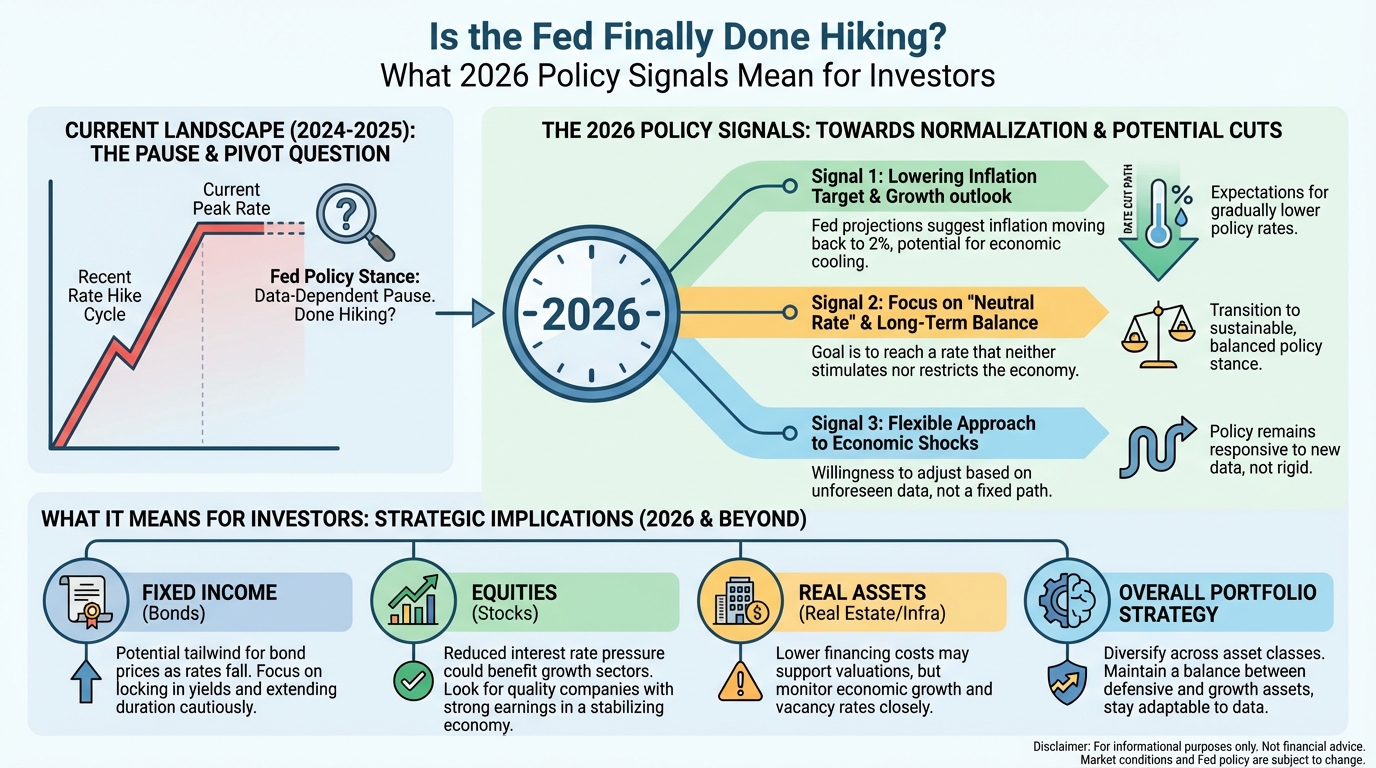
Bond yields are likely to settle into a range. Longer-duration bonds could benefit if inflation continues easing. Equity valuations face less pressure from rising discount rates. Growth sectors regain breathing space.
Credit markets would also improve. Lower refinancing stress supports corporate balance sheets.
Stability encourages risk-taking.
If Another Hike Occurs
If inflation remains stuck above 3% or energy prices surge, the Fed may need to tighten again. Even one additional hike would surprise markets positioned for cuts.
Potential effects include:
- Equity valuation compression
- Higher bond yields
- Increased market volatility
- Pressure on growth-oriented sectors
This is not the base case. Current data does not demand further tightening. But inflation remains the gatekeeper.
Key Economic Signals to Watch
Rather than predicting meeting outcomes, focus on underlying drivers:
- Core inflation consistently trending toward 2%
- Wage growth cooling without collapsing
- Gradual, controlled rise in unemployment
- Stable energy prices
These signals will shape policy decisions far more than headlines.
2026 Policy Snapshot
| Indicator | Current Direction | Why It Matters |
| Core Inflation | Moderating but above target | Determines timing of cuts |
| Unemployment | Low but inching higher | Signals economic resilience |
| Wage Growth | Slowing gradually | Impacts services inflation |
| Oil Prices | Volatile | Can quickly shift inflation outlook |
The pattern is clear. Conditions are improving. Completion has not been declared.
Close to the End, Not Across the Line
So, is the Fed done hiking? Based on current trends, the aggressive tightening phase appears complete. Rates are restrictive. Inflation is easing. The labor market is moderating.
But the Fed is not declaring victory. Inflation remains above target. Global risks persist. Employment remains solid enough to avoid urgency.
The most realistic takeaway is this: The Fed is likely done hiking for now, but not done watching.
Policy in 2026 is about discipline, not celebration. Investors should focus less on guessing the exact timing of the next move and more on tracking the data that drives decisions. The hiking cycle may be ending. The vigilance is not.
And in this environment, awareness is more valuable than certainty.
Frequently Asked Questions
Is The Fed Cutting Rates In 2026?
Rate cuts are possible later in 2026 if inflation continues trending downward. They are not guaranteed.
Could The Fed Raise Rates Again?
Yes. If inflation meaningfully reaccelerates, policymakers have left the door open for additional tightening.
What Sectors Benefit If Hikes Are Over?
Growth stocks, long-duration bonds, and rate-sensitive sectors such as housing and technology typically benefit from rate stability.
What Would Delay Or Prevent Rate Cuts?
Persistent core inflation above target, strong wage growth, or sustained increases in energy prices.
Disclaimer: This article is for informational purposes only and does not constitute investment, financial, or legal advice. Investors should conduct their own research or consult a qualified financial professional before making any decisions.
Post Disclaimer
The information provided on Financepdia.com is for educational and informational purposes only and should not be considered financial, investment, or trading advice. Cryptocurrency and financial markets are highly volatile and involve significant risk. Readers should conduct their own research (DYOR) and consult with a qualified financial advisor before making any investment decisions. Financepdia.com and its authors are not responsible for any financial losses resulting from actions taken based on the information provided on this website.