



Have you ever watched your crypto portfolio drop 20% overnight and wondered what just happened?
You’re not alone. Millions of investors feel that same gut-punch every time markets swing. And yet, the people who understand why markets move like this rarely panic. They plan.
Volatility isn’t random chaos. It has causes. It has patterns. And once you understand it, you can stop reacting emotionally and start thinking strategically.
Key Takeaways
- Volatility is normal in crypto. Bitcoin has experienced multiple 50%+ drops and recovered each time. Price swings are part of the asset class.
- Emotions drive short-term prices. Fear and greed move markets faster than fundamentals, especially in retail-heavy assets like crypto.
- Liquidity matters. Thinner markets swing harder. Crypto trades 24/7 with no circuit breakers, unlike traditional stock markets.
- Macro forces have real impact. Interest rate decisions, inflation data, and regulatory news can move crypto prices within minutes.
- Long-term investors often win by doing nothing. Historical data consistently shows that panic selling locks in losses while patient holding recovers them.
What Is Volatility, Really?
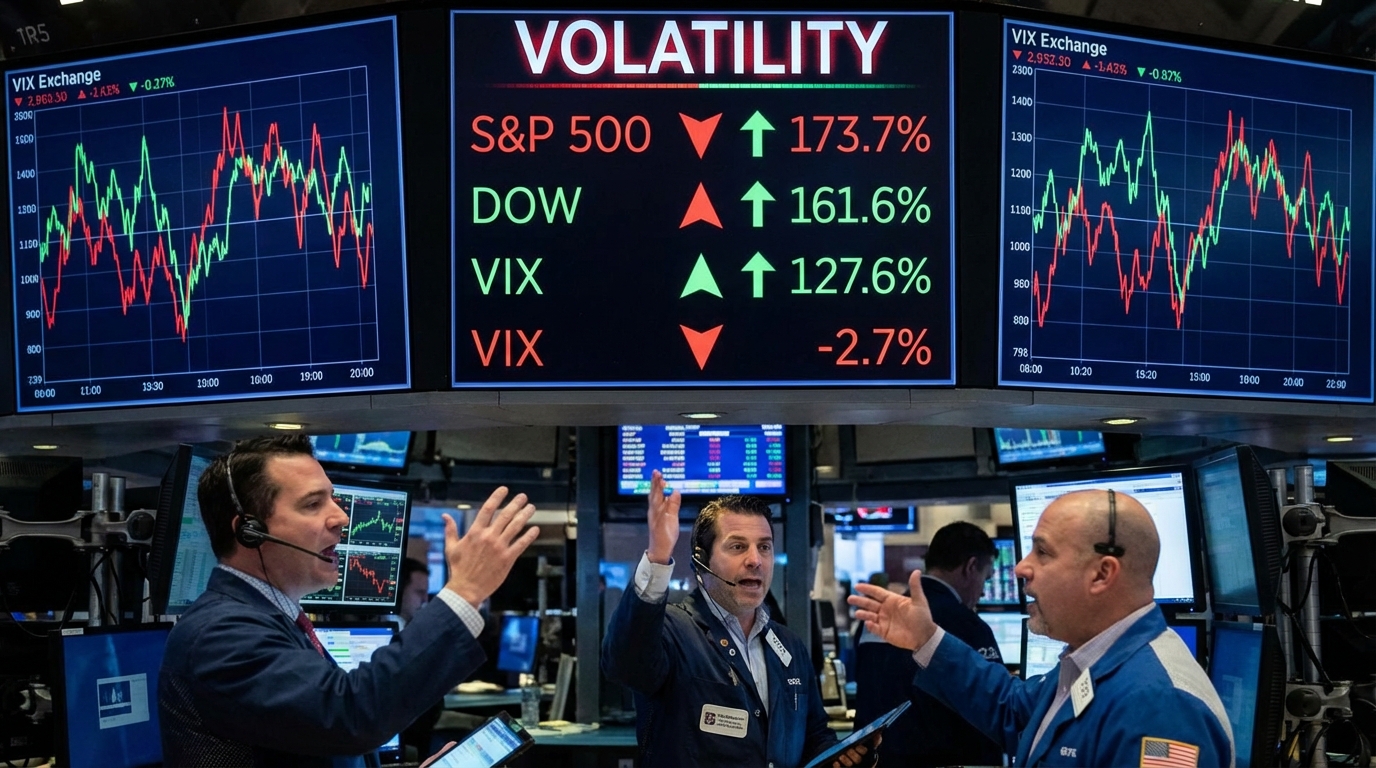
Volatility measures how much an asset’s price moves over time.
A stock that moves 1% per day is low volatility. An asset that moves 10% per day is high volatility.
Bitcoin’s average daily price movement has historically been around 3-4%. That’s roughly 5 to 10 times more volatile than most large-cap stocks.
So when you see wild swings, that’s not a bug. For crypto, it’s a feature of the current market stage.
Why Crypto Moves So Much
Several forces push crypto prices around more than traditional assets.
- Market size is smaller. The entire crypto market is worth a fraction of global stock markets. Smaller markets respond more dramatically to the same amount of money moving in or out.
- No trading halts exist. Stock exchanges pause trading during extreme moves. Crypto never stops. Panic can compound without a circuit breaker to slow things down.
- Retail participation is high. Emotional decision-making is more common among individual investors than institutions. Retail-heavy markets tend to overshoot in both directions.
- Leverage amplifies everything. Many crypto traders use borrowed money. When prices fall, forced liquidations push prices lower still. This feedback loop accelerates drops.
The Emotional Cycle Behind Every Swing
Markets don’t just move on data. They move on feelings.
The cycle looks roughly like this:
| Phase | Market Mood | What Investors Do |
| Optimism | Rising prices, good news | Buy cautiously |
| Excitement | Strong gains, media buzz | Buy aggressively |
| Euphoria | All-time highs, “can’t lose” | Buy recklessly |
| Anxiety | First dip, doubt creeps in | Hold nervously |
| Panic | Sharp drop, fear peaks | Sell at a loss |
| Capitulation | Full crash, despair | Sell everything |
| Recovery | Prices stabilize | Cautious re-entry |
| Hope | Uptrend begins again | Begin buying again |
Most retail investors buy near euphoria and sell near panic. That’s the pattern that destroys returns.
What Actually Triggers a Big Move?
Here are the most common catalysts for sharp crypto price swings:
- Regulatory news: Government crackdowns or approvals can move markets 10-20% in hours.
- Macro data releases: Inflation reports and Federal Reserve rate decisions now directly affect crypto prices.
- Exchange failures: Events like the FTX collapse in 2022 wiped billions from the market in days.
- Whale activity: Large holders moving significant amounts of crypto on-chain can signal selling pressure and trigger cascading moves.
- Media cycles: A single headline from a major outlet or influential figure can spark buying or selling frenzies.
How to Stay Calm During Volatility
Volatility feels personal. It isn’t.
The market doesn’t know you’re watching. It doesn’t move to punish your specific position. It moves because thousands of people are making emotional decisions at the same time.
A few habits help experienced investors stay grounded:
- Focus on the time horizon. If you’re investing for 5+ years, daily swings are noise. Short-term volatility is irrelevant to a long-term thesis.
- Avoid checking prices too often. Research shows that frequent price checking increases emotional reactions and leads to worse decisions.
- Keep position sizes manageable. If a 20% drop would force you to sell to cover expenses, you’ve over-allocated. Size your positions so volatility doesn’t threaten your financial stability.
- Write down your investment thesis. When prices drop, refer back to why you invested. If the thesis is intact, the drop may be an opportunity, not a signal to exit.
Frequently Asked Questions
Is crypto more volatile than gold or stocks, and does that make it a worse investment?
Crypto is significantly more volatile than both gold and large-cap stocks. However, higher volatility cuts both ways. The same characteristic that causes sharp drops also enables sharp recoveries and outsized gains. Whether this makes crypto “worse” depends entirely on your risk tolerance, time horizon, and portfolio diversification strategy. Gold is valued for stability; crypto is valued by many for asymmetric upside potential.
Does volatility decrease as crypto markets mature?
Historically, yes. Bitcoin was far more volatile in its early years than it is today. As institutional participation increases, market capitalization grows, and regulatory clarity improves, volatility tends to compress over time. Ethereum’s volatility has also trended lower as the ecosystem has matured. That said, crypto remains materially more volatile than most traditional asset classes and likely will for years.
How is crypto volatility different from volatility in emerging market stocks?
Emerging market stocks are volatile due to currency risk, political instability, and lower liquidity. Crypto volatility shares some of those traits but adds unique factors: 24/7 global trading with no circuit breakers, significant leverage usage across the ecosystem, high retail participation, and a still-developing regulatory framework. Crypto can also move on sentiment alone in ways that equities typically cannot, making behavioral drivers especially powerful in the short term.
Sources
- CoinGlass: Bitcoin Historical Volatility Data: https://www.coinglass.com
- Federal Reserve:Interest Rate Decisions and Market Impact: https://www.federalreserve.gov
- CoinDesk: FTX Collapse Coverage: https://www.coindesk.com/tag/ftx/
- Glassnode: On-Chain Market Intelligence: https://glassnode.com
Disclaimer: This article is for informational purposes only. It is not financial advice. Always do your own research.
Post Disclaimer
The information provided on Financepdia.com is for educational and informational purposes only and should not be considered financial, investment, or trading advice. Cryptocurrency and financial markets are highly volatile and involve significant risk. Readers should conduct their own research (DYOR) and consult with a qualified financial advisor before making any investment decisions. Financepdia.com and its authors are not responsible for any financial losses resulting from actions taken based on the information provided on this website.