

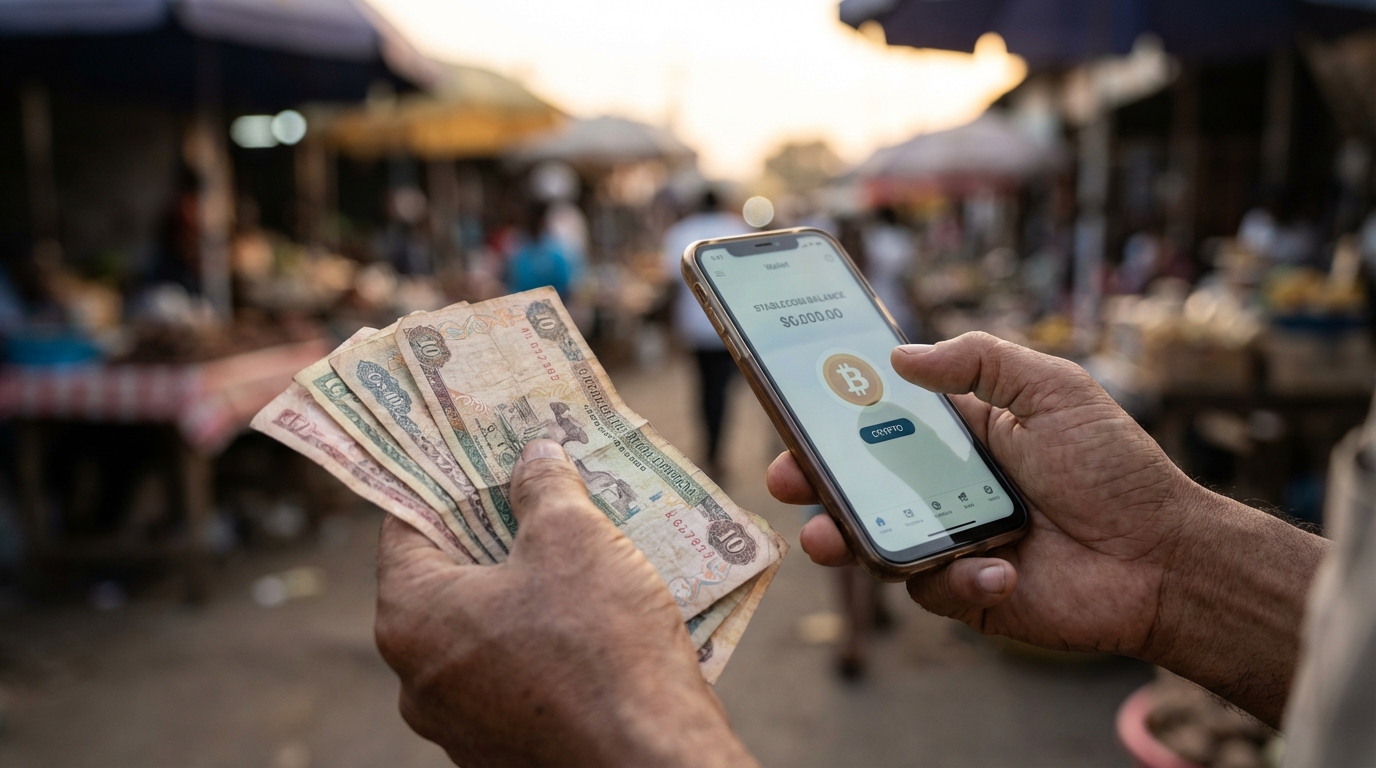





Top 7 Forex Pairs Every Beginner Should Learn First

Top 7 Forex Pairs Every Beginner Should Learn First

Is crypto starting to feel too fast, too wild, and too hard to read for a new trader?

Many beginners ask about when sharp price swings shake confidence. For that reason, some new traders look at forex trading for beginners as a calmer way to learn charts, timing, and risk.

The forex market is the world’s largest over-the-counter market, with an average daily turnover of $7.5 trillion in the 2022 BIS survey. Currencies are traded in pairs, so one currency is always priced against another. A pip is usually 0.0001 for most major pairs, while yen pairs are the common exception.

So, a beginner does not need to study dozens of charts. In most cases, it is smarter to start with a short list of major currency pairs. These pairs usually have better liquidity, tighter spreads, and cleaner price action than many minor or exotic pairs.

Quick View of the 7 Best Forex Pairs for Beginners


Forex pair Why beginners study it first Typical move profile Main things that move it
EUR/USD Most watched and very liquid Low to medium Fed, ECB, inflation, jobs data
USD/JPY Clean reactions to rate news Medium Fed, BOJ, bond yields, risk mood
GBP/USD Popular and active Medium to high Bank of England, UK data, USD strength
AUD/USD Good for learning commodity links Medium China demand, metals, RBA
USD/CAD Teaches oil and currency links Medium Oil prices, Bank of Canada, Fed
USD/CHF Good safe haven example Low to medium Risk fear, SNB, USD demand
NZD/USD Clear but slightly less active Medium RBNZ, dairy trade, risk mood


1. EUR/USD

EUR/USD is often the first chart a new trader studies. It is widely known as the most traded currency pair in the world. That matters because heavy trading activity often brings tight spreads and smoother order flow.

It usually reacts to Federal Reserve and European Central Bank policy, plus inflation and jobs data. So, it gives beginners a clean way to learn how news changes price. Also, because it is so liquid, many traders see it as one of the best places to practice patience and chart reading.

2. USD/JPY

USD/JPY is another core pair for beginners. It is easy to find news on, and it often reacts clearly when the market focuses on interest rate gaps between the United States and Japan. The yen pair also reminds beginners that pip pricing is different, since yen pairs commonly use 0.01 as the pip location.

In addition, the yen often gets attention when markets turn nervous. That gives this pair a useful lesson in how risk sentiment can change price. For a beginner, that is a strong reason to keep USD/JPY on the watchlist.

3. GBP/USD

GBP/USD, often called Cable, is another major pair beginners should know. It is liquid and popular, but it tends to move faster than EUR/USD. That makes it exciting, but it also means a beginner should take a smaller risk.

This pair often reacts to Bank of England decisions, UK inflation, growth data, and broad U.S. dollar strength. As a result, it can teach a beginner how one strong news release can shift a chart quickly. Still, its larger swings mean it may be better for observation first and live trading later.

4. AUD/USD

AUD/USD is useful because it teaches that currencies do not move on central bank news alone. Australia’s dollar is shaped by global demand, commodity prices, and trade flows. The Reserve Bank of Australia explains that demand and supply in the foreign exchange market drive the Australian dollar, and trade links matter a lot.

So, a beginner who studies AUD/USD starts to see the link between currencies, metals, and Asia growth themes. That makes it a smart bridge pair for traders coming from crypto, where macro themes can also move price fast.

5. USD/CAD

USD/CAD is one of the best beginner pairs for learning how a national export story affects a currency. Canada exports large amounts of crude oil, and official Canadian sources track both oil exports and commodity prices closely. Because of that, oil often matters for the Canadian dollar.

When oil rises, traders often watch for CAD strength. When oil drops, they often look for pressure on CAD. So, USD/CAD can help a new trader connect charts with real world trade flows.

6. USD/CHF

USD/CHF helps beginners learn the idea of a safe haven currency. The Swiss National Bank notes the Swiss franc’s reputation as a safe haven, especially during periods of global uncertainty. That means this pair can react when fear rises in the market.

Also, USD/CHF often feels steadier than faster pairs like GBP/USD. For that reason, some beginners like to track it as a lower drama chart while they build skill and discipline.

7. NZD/USD

NZD/USD is a solid final pair on the beginner list. It is still a major style pair, but it is usually watched less than EUR/USD or USD/JPY. Even so, it gives useful lessons about trade-weighted currencies and export-driven economies. The Reserve Bank of New Zealand tracks the NZD against major currencies and its trade-weighted index.

Therefore, NZD/USD can help a new trader compare a smaller developed market currency with the U.S. dollar. It is a good pair for learning without jumping straight into very fast charts.

The Smartest Way to Start With Forex Pairs

A beginner does not need all seven pairs on screen at once. In many cases, the better move is to start with EUR/USD, USD/JPY, and one extra pair such as AUD/USD or USD/CAD. That small watchlist teaches liquidity, spreads, volatility, and news impact without causing overload.

Start Small, Learn Deep

The best first step in forex for beginners is not chasing the fastest chart. It is learning how a few major forex pairs behave day after day. EUR/USD teaches balance. USD/JPY teaches rates. GBP/USD teaches speed. AUD/USD and USD/CAD teach commodity links. USD/CHF teaches safety flows. NZD/USD teaches trade-driven movement.

That is enough to build a real base. After that, a beginner can read charts with more calm and far less guesswork.

Disclaimer: This article is for education only and is not financial advice. Forex and crypto both carry risk, and losses can happen quickly.


Post Disclaimer

The information provided on Financepdia.com is for educational and informational purposes only and should not be considered financial, investment, or trading advice. Cryptocurrency and financial markets are highly volatile and involve significant risk. Readers should conduct their own research (DYOR) and consult with a qualified financial advisor before making any investment decisions. Financepdia.com and its authors are not responsible for any financial losses resulting from actions taken based on the information provided on this website.

VC Money Returns to Crypto: What New Funding Rounds Signal for 2026

VC Money Returns to Crypto: What New Funding Rounds Signal for 2026

Is crypto still too risky for new investors, or is smart money already moving back in before the crowd notices?

That is the question many beginners and cautious buyers are asking in 2026. After a long stretch of fear, weak prices, and failed projects, many investors wanted proof that the market was healing. Now that proof is starting to appear. It is showing up in crypto VC funding, large private rounds, and fresh deals in parts of the market that look far more practical than hype-led trends. So, the signal is getting harder to ignore.

According to Galaxy’s Q4 2025 crypto venture report, venture investors put $8.5 billion across 425 deals in Q4 2025. Galaxy also said more than $20 billion went into crypto and blockchain startups during 2025, which made it the biggest year since 2022. That matters because it shows a clear return of capital, but with a more careful style than the last cycle.

Even more telling, The Tie’s January 2026 funding brief reported 128 rounds across 111 crypto companies for a combined $2.5 billion in January alone. Payments firms led by deal count, and the largest public venture round was Rain’s $250 million Series C. As a result, 2026 is not starting with random meme heat. It is starting with money flowing into infrastructure.

What the New Funding Wave is Really Saying

The first message is simple. VCs are backing businesses that solve real problems. In the last cycle, funding often chased buzzwords. In this cycle, much of the money is going to firms working on stablecoin payments, tokenization, custody, trading rails, and core blockchain infrastructure. Galaxy said late-stage companies took 56% of capital in Q4 2025, while pre-seed deal count still stayed healthy. That mix suggests the market now values both proven scale and fresh early ideas, but it wants stronger business cases.

The second message is about quality. Median deal size and valuations rose in 2025, and Galaxy noted that the median pre-money valuation in Q4 2025 hit $70 million. That does not mean every startup is a winner. However, it does show that investors are paying up for teams that already have traction, revenue potential, or a clear product fit.

The Biggest Clue is Where the Money is Going

A good example is Rain. In January 2026, Rain announced a $250 million Series C led by ICONIQ at a $1.95 billion valuation. The company said it processes more than $3 billion in annualized transactions and serves 200+ partners with stablecoin payment tools. That is not a bet on noise. It is a bet on stablecoin rails becoming part of normal finance.

Another strong example is Superstate. The firm closed an $82.5 million Series B in January 2026 to push forward tokenized investment products. This is important because tokenization and real-world assets are now among the clearest growth areas in crypto. In other words, VC firms are not just funding coins. They are funding the systems that could connect crypto with funds, treasuries, and regulated markets.

The same pattern showed up before 2026 as well. Mesh raised $82 million in 2025 to build crypto payment infrastructure, and the company said most of the investment was settled in PYUSD stablecoin. That detail matters because it shows investors are not only funding stablecoin tools. In some cases, they are already using them.

Quick View of What Recent Rounds Suggest


Company / Signal Funding Event What It Suggests for 2026
Rain $250M Series C Stablecoin payments are moving closer to mainstream business use
Superstate $82.5M Series B Tokenization and on-chain investment products are gaining serious backing
Mesh $82M Series B in 2025 Crypto payments infrastructure remains a priority area
Mastercard + BVNK Up to $1.8B acquisition deal Large finance players want exposure to stablecoin infrastructure and on-chain rails
Galaxy + The Tie data Strong 2025 and January 2026 totals The funding comeback is broad enough to count as a real market trend


Why This Matters for Early Investors

For retail investors, the key point is not that every funded startup will soar. The key point is that venture capital often moves early, long before public markets fully price in a trend. When VCs start writing larger checks into crypto funding rounds, they are usually seeing demand, policy progress, or product use that is not yet obvious to the average trader.

Therefore, the strongest early-stage upside in 2026 may come from sectors that VCs keep backing again and again. Right now, that list includes stablecoins, crypto payments, tokenized assets, real-world asset platforms, and broader crypto infrastructure. By contrast, the old high-noise sectors such as gaming and NFT-heavy ideas are no longer getting the same share of attention. Galaxy’s report said payments, banking, tokenization, trading, and infrastructure are now much more central to the funding map.

There is also a second signal. Mastercard’s March 2026 deal to acquire BVNK for up to $1.8 billion shows that large payment firms want direct access to stablecoin infrastructure and on-chain payment rails. That kind of move gives the venture market a clear exit path. And when exit paths improve, startup funding usually follows.

Why 2026 Could Reward the Builders First

The new funding rounds do not say that crypto risk is gone. They do say that smart capital is returning with a much sharper filter. Investors are backing companies with products, rails, licenses, users, and business value. That is a healthier setup than a cycle built on pure excitement.

So, what do the latest rounds signal for 2026? They signal a market that is growing up. They signal that blockchain startup funding is coming back with discipline. And they signal that the next winners may come from the parts of crypto that make money move faster, assets easier to issue, and on-chain finance easier for normal firms to use. For investors watching the next wave, that is the signal worth following.

Disclaimer: This article is for informational purposes only and does not provide financial or investment advice. Crypto assets and early-stage projects carry high risk.


Post Disclaimer

The information provided on Financepdia.com is for educational and informational purposes only and should not be considered financial, investment, or trading advice. Cryptocurrency and financial markets are highly volatile and involve significant risk. Readers should conduct their own research (DYOR) and consult with a qualified financial advisor before making any investment decisions. Financepdia.com and its authors are not responsible for any financial losses resulting from actions taken based on the information provided on this website.

Stablecoins Under Fire: Are They Really Destabilizing Emerging Markets?

Stablecoins Under Fire: Are They Really Destabilizing Emerging Markets?

That question is now at the center of the stablecoins debate. Many crypto users see USDT and USDC as a fast way to move money, save in dollars, and avoid local currency pain. However, central banks and global watchdogs are sounding the alarm. They warn that heavy use of dollar-backed stablecoins could weaken local currencies, speed up capital flight, and reduce a country’s control over its own money system. 

The concern is serious. Yet the full picture is more complicated. In many emerging markets, people do not buy stablecoins for speculation first. They buy them because local inflation is high, banking access is weak, and sending money across borders is still slow and costly. Stablecoins may create new risks, but they are also solving old failures that governments and banks have not fixed. 

Why Regulators Are Worried

The main fear is dollarization. When people in weaker economies shift savings and payments into US dollar stablecoins, local currency demand can fall. That can make the exchange rate pressure worse. It can also weaken the power of central banks to guide credit, inflation, and liquidity within the country. The BIS says wider use of foreign currency stablecoins can raise concerns about monetary sovereignty and weaken the effect of foreign exchange rules. 

There is also the issue of capital flow volatility. If people can move value into stablecoins and send it abroad at any hour, money can leave faster during a crisis. That matters a lot in economies with thin reserves and fragile confidence. The FSB warned that foreign currency stablecoins in emerging market and developing economies can increase financial stability risks by destabilizing flows and putting strain on fiscal resources. 

Still, the threat is not only macroeconomic. There is also market structure risk. If a major stablecoin loses its peg, freezes redemptions, or faces legal pressure, users in weaker economies can be hit harder because they often hold stablecoins as a savings tool, not just as trading collateral. The memory of TerraUSD still hangs over the sector, even though algorithmic models are different from reserve-backed coins. Goldman Sachs

Why users in emerging markets still keep buying stablecoins

The simple answer is that stablecoins often work better than the local options. In many regions, people face currency volatility, strict capital controls, slow bank transfers, and limited access to real dollar accounts. A phone wallet with USDT can feel safer than a local bank account that loses value every month. Goldman Sachs notes that stablecoins can offer immediate access to dollars for users who do not have access to US bank accounts, and says remittances are one of the strongest use cases in emerging markets. 

That demand is visible on the ground. Chainalysis reported that in parts of Latin America, stablecoin purchases made up more than half of exchange purchases for major local currencies during the period it studied. It linked that pattern to inflation, currency swings, and the search for dollar-linked savings and payments. 

Moreover, remittances remain expensive in many corridors. The World Bank found that the average cost of sending $500 in Q1 2025 was 3.66% across the tracked G20 markets, while digital-only money transfer operators averaged 3.55%. That is better than older bank rails, but still meaningful for families sending money often. This is why stablecoin payments keep gaining attention.

What The Data Suggests


Issue Why it matters in emerging markets What current sources say
Dollarization Local currency use may fall The BIS warns that foreign currency stablecoins can weaken monetary sovereignty and FX rules.
Capital flight Money can leave fast during panic The FSB says stablecoins can destabilize financial flows in EMDEs.
Remittances Families need cheaper transfers Goldman Sachs and the World Bank show strong remittance demand and ongoing fee pressure.
Inflation hedge Households seek dollar safety Chainalysis links strong stablecoin use in Latin America to inflation and currency weakness.
System risk A depeg or issuer problem can spread quickly The BIS says stablecoins perform poorly as the base of a monetary system.


So, Are Stablecoins Really Destabilizing Emerging Markets?

The honest answer is sometimes, but not by default. Stablecoins can add pressure to weak economies. They can speed up unofficial dollarization. They can weaken policy tools. They can make cross-border leakages harder to track. In a panic, they can act like a digital exit door. IMF 

However, blaming stablecoins alone misses the deeper problem. People usually run to digital dollars when local systems are already failing them. High inflation, weak banking access, transfer delays, and loss of trust come first. Stablecoins often arrive as the symptom, not the root cause. That does not make them harmless. It means the debate should focus less on panic and more on rules, reserves, audits, redemption standards, and local payment reform. 

The Real Fault Line Ahead

The real question is not whether stablecoins are good or bad. The real question is who controls money when trust in local systems breaks down. In emerging markets, that answer now matters more than ever. If governments respond with smarter rules and better payment rails, stablecoins may stay a useful side tool. If they do nothing, US dollar stablecoins could become the unofficial savings account for millions, and that would change the balance of power in finance far beyond crypto.

Disclaimer: This article is for informational purposes only and does not provide financial, legal, or investment advice. Crypto assets, including stablecoins, carry market, regulatory, and counterparty risk.


Post Disclaimer

The information provided on Financepdia.com is for educational and informational purposes only and should not be considered financial, investment, or trading advice. Cryptocurrency and financial markets are highly volatile and involve significant risk. Readers should conduct their own research (DYOR) and consult with a qualified financial advisor before making any investment decisions. Financepdia.com and its authors are not responsible for any financial losses resulting from actions taken based on the information provided on this website.