


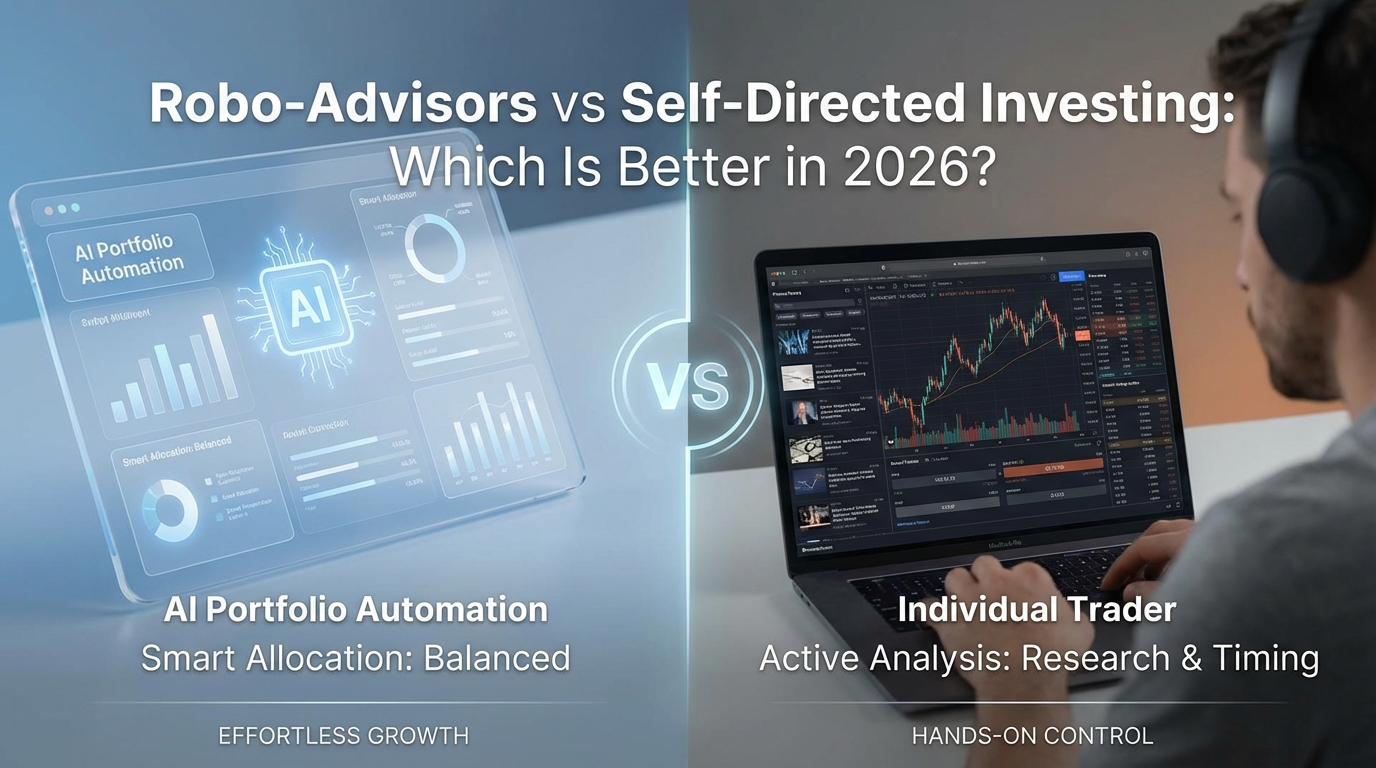

Should a new investor trust an app to manage money, or take full control and build a portfolio alone in 2026?
That question matters even more now. Many crypto investors want growth, but they also want safety after years of market swings, platform failures, and sudden trend changes. At the same time, more people are comparing robo-advisors, self-directed investing, automated investing, and DIY investing before making the next move.
So, the better choice in 2026 depends on risk tolerance, time, skill level, costs, and crypto goals. One path offers more structure. The other gives more control. However, control is not always better for every investor. Likewise, automation is not always the safer answer if the investor picks a poor platform or ignores the fine print.
What Is a Robo-Advisor in 2026?
A robo-advisor is a digital investment service that uses software to build and manage a portfolio. It often asks about goals, time horizon, and risk tolerance, then places money into a mix of funds, often ETFs. Some also offer automatic rebalancing, tax tools, and limited access to a human adviser.
According to Investor.gov’s bulletin on robo-advisers, robo-advisors can offer lower costs and fees, but the investor still needs to check whether the service fits personal goals, product range, and desired level of human help. In addition, the advice depends on the information the investor enters into the online questionnaire.
In 2026, this model appeals to beginners and busy workers. It also fits people who want a simple path into portfolio management without picking every asset one by one. Still, a robo-advisor usually stays inside a set system. That can limit freedom, especially for crypto-focused investors.
What Is Self-Directed Investing?
Self-directed investing means the investor makes the choices personally. That includes selecting stocks, ETFs, bonds, bitcoin products, ether products, or direct crypto holdings through a wallet or exchange account.
This route gives full control over asset mix, entry points, and strategy. As a result, it often attracts crypto users who already follow market news, on-chain trends, and macro signals. They may prefer direct ownership, active rebalancing, and flexible timing.
Yet self-direction also comes with more work. Research, risk control, and discipline all sit with the investor. Investor.gov’s 2025 bulletin on fees notes that even small fees can make a major difference over time, and FINRA points out that passive investing often helps with diversification and periodic rebalancing. Therefore, a self-directed investor who chases hype and ignores balance can do more harm than a plain automated plan.
Robo-Advisors vs Self-Directed Investing in 2026
| Factor | Robo-Advisors | Self-Directed Investing |
| Control | Low to medium | High |
| Ease of use | Very simple | Depends on skill |
| Time needed | Low | High |
| Fees | Advisory fee plus fund fees | Trading, spread, fund, or custody costs |
| Diversification | Often built in | Must be done by the investor |
| Crypto access | Usually limited | Much broader |
| Rebalancing | Often automatic | Manual, unless tools are used |
| Best for | Beginners and hands-off investors | Active investors and crypto users |
This comparison shows the real split. Robo-advisor vs self-directed investing is not only about returns. It is also about behavior. For example, many investors fail because they panic, trade too much, or put too much money into one theme.
A robo-advisor can reduce those mistakes by keeping the process steady. On the other hand, a self-directed account may suit an investor who wants to hold spot bitcoin ETPs, crypto-related stocks, or direct digital assets that a robo platform may not offer.
Why Crypto Investors Look at This Question Differently in 2026
Crypto investors often care about access, custody, and timing more than traditional investors. That changes the debate.
Investor.gov explains that spot bitcoin and ether ETPs can give exposure without handling private keys directly, but those products still carry speculation risk, tracking differences, and sponsor fees. Investor.gov also notes that crypto custody depends on how and where assets are stored, since wallets hold private keys rather than the assets themselves.
So, for a crypto audience, the real question becomes this: Does the investor want simple market exposure, or direct control over crypto holdings?
If the goal is broad wealth building with small stress, a robo-advisor may fit better. Meanwhile, if the goal includes direct crypto ownership, wallet custody, altcoin research, or tactical buying, self-directed investing makes more sense.
Which Option Is Better in 2026?
For beginners, robo-advisors are often better. They offer structure, easier asset allocation, and less emotional trading. They can also help investors stay diversified instead of going all in on one coin, one meme stock, or one trend.
For experienced investors, self-directed investing may be better. It gives room to build a custom mix of ETFs, crypto products, direct bitcoin exposure, and cash reserves. However, that freedom only works well when the investor has a plan and follows it.
For crypto-first investors, the answer is often mixed. A person may keep a core long-term portfolio in a robo-advisor and manage a smaller self-directed portfolio for crypto and high-conviction ideas. In that case, automation handles the base, while direct control covers the high-risk part.
The Smarter Choice May Not Be One or the Other
The strongest answer in 2026 is not always a clean winner. It is often the model that matches the investor’s habits.
If the investor wants low-maintenance investing, broad diversification, and steady progress, a robo-advisor stands out. If the investor wants full control, wider crypto access, and a custom strategy, self-directed investing stands out. Most importantly, the better path is the one the investor can stick with during both rallies and sharp drops.
Disclaimer: This article is for educational purposes only and is not financial, legal, or tax advice. All investing involves risk, including loss of principal. Crypto assets, spot crypto ETPs, and self-directed accounts may carry added volatility, fees, custody, and fraud risks.
Post Disclaimer
The information provided on Financepdia.com is for educational and informational purposes only and should not be considered financial, investment, or trading advice. Cryptocurrency and financial markets are highly volatile and involve significant risk. Readers should conduct their own research (DYOR) and consult with a qualified financial advisor before making any investment decisions. Financepdia.com and its authors are not responsible for any financial losses resulting from actions taken based on the information provided on this website.