
Do you feel confused about where to invest your money in Q1 2026?
You hear about AI funds, ETFs, crypto, and stocks every day. Social media pushes “hot tips.” News channels talk about market crashes and record highs at the same time.
So you ask yourself: Where should a beginner actually start?
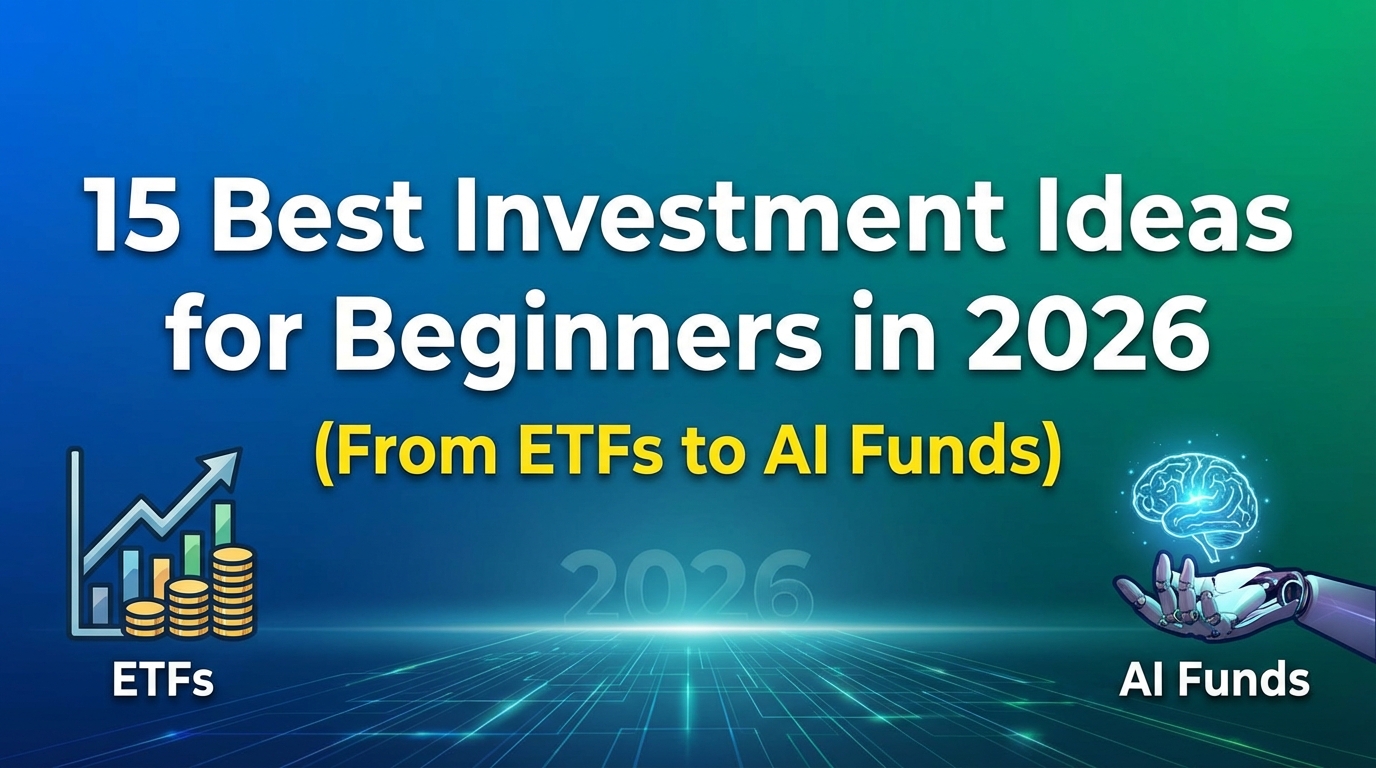
This guide will show you the 15 Best Investment Ideas for Beginners in 2026 in simple terms. You will learn what they are, why they work, the risks involved, and how to get started.
This guide will show you the 15 Best Investment Ideas for Beginners in 2026 in simple terms. You will learn what they are, why they work, the risks involved, and how to get started.
Let’s build your foundation first.
Beginner’s First Step: Get Your Foundation Right
Before you invest a single dollar, set up your base.
Emergency Fund & High-Yield Holdings
Do not invest money you may need next month.
Build an emergency fund that covers 3-6 months of expenses. Keep this money in:
- High-yield savings accounts
- Money market accounts
- Short-term CDs
These accounts protect your cash and earn interest. They give you peace of mind. Without this safety net, you may sell investments at the wrong time.
Stability first. Growth second.
Set Clear Goals & Time Frames
Ask yourself:
- Do I invest for retirement?
- Do I save for a house?
- Do I want extra income?
Short-term goals (1-3 years) need safer investments.
Long-term goals (5+ years) allow more growth investments.
Time controls risk. The longer you invest, the more risk you can handle.
Understand Risk vs Reward
Investing is not saving.
Savings protect money. Investing grows money.
Markets move up and down. That movement is called volatility. Beginners often panic when prices fall.
Understand this simple rule:
Higher potential return = Higher risk.
If you accept this, you stay calm during market drops.
Core Investment Vehicles Every Beginner Should Know
Before choosing investments, you should understand the basic tools available.
Index Funds & Broad Market ETFs
Index funds and ETFs track a market index like the S&P 500. They let you invest in hundreds of companies at once, giving you instant diversification. They usually have low fees and are easy to manage. Many experts recommend them as a first investment for beginners.
Mutual Funds
Mutual funds pool money from many investors. There are two types: index funds and actively managed funds. Index funds track the market. Actively managed funds have a manager who picks stocks. Beginners often choose index funds because they cost less.
Retirement Accounts as Investment Tools
Common options include 401(k), Traditional IRA, and Roth IRA. These accounts offer tax benefits, which help you keep more of your returns. If your employer offers a 401(k) match, invest enough to get the full match, it is free money.
Fractional Shares & Micro-Investing
You do not need a lot of money to start. Many apps let you buy fractional shares. You can invest small amounts like $10 or $50. This makes investing accessible for beginners.
Top 15 Investment Ideas for Beginners in 2026
Now let’s explore the real core of this guide: the 15 Best Investment Ideas for Beginners in 2026, explained clearly and simply. If you feel overwhelmed by investing, this section will make things easier. You do not need to invest in everything. You just need to understand your options.
1) Broad Market ETFs
A broad market ETF allows you to invest in hundreds or even thousands of companies at once. When you buy one, you are not betting on a single company. You are investing in the overall market. That is why many experts call this the “smart beginner move.”
It offers instant diversification, low fees, and simple long-term growth. The main risk is simple: if the overall market falls, your investment falls too. But over long periods, markets have historically grown.
Examples include S&P 500 ETFs and Total Market ETFs. For beginners, this is often the safest place to start.
2) AI & Tech-Focused ETFs
Artificial intelligence continues to reshape industries in 2026. AI and tech-focused ETFs let you invest in companies leading this innovation without choosing just one stock. Instead of guessing which AI company will win, you spread your money across many. That lowers risk compared to buying a single tech stock. The upside can be strong because technology grows fast.
However, tech sectors can swing sharply during market corrections. These funds work well as a “growth booster alongside a stable core ETF.” They offer exposure to innovation while maintaining some diversification.
3) Thematic AI Funds (Robotics, Generative AI)
Thematic AI funds focus on specific areas like robotics, automation, or generative AI tools. These investments target “future trends.” If those industries expand quickly, returns can grow rapidly. That makes them exciting.
However, they are also more volatile because they depend on one narrow theme. If that theme slows down, performance may suffer. Beginners should treat these funds as a small satellite position, not the foundation of their portfolio. They offer high growth potential but higher volatility.
4) Dividend ETFs / Income Funds
Dividend ETFs invest in companies that regularly share profits with investors. That means you receive payments while holding the fund. Many dividend-paying companies are stable and well-established. This makes them attractive for beginners who prefer smoother performance and some income.
They may not grow as aggressively during strong bull markets, but they often hold up better during downturns. Dividend ETFs provide a balance of steady income and moderate growth. They are ideal for those who want “cash flow while building wealth.”
5) Target-Date Retirement Funds
Target-date funds are designed for simplicity. You choose a retirement year, such as 2050 or 2060, and the fund automatically adjusts your investments over time. When you are young, it holds more stocks for growth.
As you approach retirement, it shifts toward safer bonds. This structure makes it ideal for beginners who want a “set it and forget it” strategy. The only drawback is limited customization. But for someone who wants automatic diversification and long-term discipline, this is a powerful option.
6) Index Funds (S&P 500, Total Market)
Index mutual funds work similarly to ETFs, but they trade slightly differently. They track major market indexes and aim to match market performance. Over decades, broad indexes have shown steady growth. That long-term track record makes them a trusted starting point.
They also come with low expense ratios, which means you keep more of your returns. The downside is simple: they move with the market. For beginners who want “proven long-term investing,” index funds remain a classic choice.
7) ESG / Sustainable ETFs
ESG ETFs invest in companies that meet environmental, social, and governance standards. If you care about sustainability or ethical practices, these funds allow you to align money with values. You still get diversification, but with a filtered approach.
Some sectors may be excluded, which can slightly affect performance. Still, ESG investing continues to grow in popularity. For beginners who want both purpose and profit, ESG ETFs provide value-based diversification with long-term potential.
8) REITs (Real Estate Investment Trusts)
REITs allow you to invest in real estate without buying property yourself. They own apartments, offices, malls, and other buildings. Many REITs pay dividends, which adds income to your portfolio.
Real estate can diversify your investments because it does not always move exactly like stocks. However, REITs react strongly to interest rate changes. When rates rise, real estate can struggle. Even with that risk, REITs provide “property exposure without large capital.”
9) Bonds & Bond ETFs
Bond funds invest in loans made to governments or companies. In return, they pay interest. Bonds generally fluctuate less than stocks, which makes them helpful for reducing portfolio volatility.
Beginners who feel nervous about market swings often include bonds for stability. The tradeoff is lower long-term growth compared to stocks. Bonds work best as a balancing tool. They bring stability, predictable income, and lower volatility during uncertain markets.
10) International & Emerging Market ETFs
If you only invest in your home country, you depend entirely on one economy. International ETFs solve that problem. They invest in companies across Europe, Asia, and emerging markets. This global exposure spreads risk and opens new growth opportunities.
However, international investing comes with currency fluctuations and political risks. For beginners, adding global exposure creates stronger diversification beyond one economy.
11) Small-Cap or Growth Stock Funds
Small-cap funds invest in smaller companies that have room to grow. These businesses often expand faster than large corporations. That growth potential can lead to strong returns. However, smaller companies also face higher business risks.
Prices can rise quickly and fall quickly. Beginners who choose this option must understand the volatility involved. These funds work best as a “growth enhancer” within a diversified portfolio.
12) Robo-Advisor Portfolios
Robo-advisors simplify investing. You answer a few questions about your goals and risk level. The platform builds a diversified portfolio for you. It automatically rebalances your investments and keeps everything aligned with your plan.
This removes emotional decision-making. The main cost is the management fee. Still, for beginners who feel overwhelmed, robo-advisors provide structured, automated, and disciplined investing.
13) Cryptocurrency Index Funds
Crypto index funds track multiple digital assets instead of one coin. This spreads risk across the crypto market. Cryptocurrency offers high growth potential, but it also comes with extreme price swings.
Beginners should treat crypto as a speculative investment. Limit it to a small percentage of your total portfolio. Think of it as “high risk, high reward exposure” rather than your main strategy.
14) Precious Metals & Commodity Funds
Gold, silver, and commodities often perform differently from stocks. Investors use them as a hedge against inflation and economic uncertainty. Commodity funds can protect purchasing power during turbulent times. However, they do not produce regular income like dividends or bonds.
Prices can move sharply based on global events. For beginners, commodities serve as “an inflation hedge, not a growth engine.”
15) Cash Alternatives & Stable Value Funds
Cash alternatives include money market funds and stable value funds. They focus on preserving capital while earning modest interest. These options are ideal for short-term goals or emergency savings.
They will not build wealth quickly, but they protect your money from heavy market swings. For beginners, keeping some funds in stable options creates capital preservation and financial peace of mind.
How to Buy Your First ETF or Fund
Follow these steps:
- Open a brokerage account.
- Transfer money.
- Search for the ETF symbol.
- Choose amount.
- Place order.
- Turn on automatic investing.
Rebalance once or twice a year.
Common Beginner Mistakes
- Chasing hot stocks
- Investing without emergency fund
- Panic selling
- Ignoring fees
Tax & Cost Considerations Beginners Must Know
You should understand a few basic terms before investing. An expense ratio is the annual fee charged by a fund. A capital gains tax is the tax you pay on profits when you sell an investment. A dividend tax is the tax on payouts you receive from investments.
Lower fees mean higher long-term returns, so always pay attention to costs.
Common Myths About “Best Investments”
Myth: There is one “best stock” for everyone.
Truth: Diversification wins long-term.
Myth: You need a lot of money to start.
Truth: You can start small.
Myth: You must time the market.
Truth: Time in the market beats timing the market.
How to Stay Committed Long-Term?
Starting is easy. Staying invested is the real challenge.
Markets will rise. Markets will fall. News headlines will try to scare you. Social media will hype the next “hot stock.” The difference between average investors and successful investors is simple: discipline.
Here is how you stay committed for the long run:
1. Use “Dollar-Cost Averaging” to Remove Emotion
Dollar-cost averaging means you invest a fixed amount regularly, weekly or monthly, no matter what the market does. When prices are high, you buy fewer shares. When prices are low, you buy more shares.
This strategy helps you:
- Avoid market timing
- Reduce emotional decisions
- Build wealth consistently
Instead of asking “Is this the right time?”, you follow a system. Systems beat emotions in investing.
2. Rebalance Your Portfolio Once a Year
Over time, some investments grow faster than others. For example, your AI ETF may grow faster than your bond fund. That changes your risk level.
Rebalancing means you adjust your portfolio back to your original target percentages.
If you planned:
- 70% stocks
- 30% bonds
And stocks grow to 80%, you trim them back to 70%.
This keeps your risk aligned with your goals. Rebalancing protects you from becoming accidentally overexposed.
3. Ignore Daily Market Noise
Financial media makes money from drama. Headlines often exaggerate short-term movements.
Long-term investors focus on:
- 5-year growth
- 10-year growth
- Retirement timelines
Not daily price swings.
Checking your portfolio every hour increases stress. Checking it occasionally keeps perspective. Remember: volatility is normal, panic is optional.
4. Stay Focused on Your Goals
Your investment plan should connect to a goal:
- Financial independence
- Retirement
- Buying a home
- Building generational wealth
When markets fall, remind yourself why you started. A clear goal keeps you steady when emotions rise.
Consistency builds wealth. Patience multiplies it.
Final Action Plan: 30-Day Beginner Investing Journey
If you feel ready but unsure how to begin, follow this simple 30-day roadmap. This removes confusion and gives you momentum.
Week 1: Build Your Financial Safety Net
Before investing, calculate your monthly expenses. Aim to save 3-6 months of living costs in a high-yield savings account.
If you already have this, review it. Make sure it still covers your current lifestyle.
Security first. Growth second.
Week 2: Open the Right Account
Choose where you will invest:
- 401(k) (especially if your employer offers a match)
- Roth IRA or Traditional IRA
- Brokerage account
Complete the setup. Link your bank account. Learn how the platform works. This step turns “thinking about investing” into taking real action.
Week 3: Choose 2-3 Simple, Diversified Funds
Keep it simple. For example:
- One broad market ETF
- One international ETF
- Optional: one bond or dividend ETF
You do not need complexity. You need clarity. Start with a core foundation before adding themes like AI or small-cap growth.
Week 4: Automate Everything
Set up automatic transfers from your bank to your investment account. Choose a fixed monthly amount. Even a small number works.
Automation creates consistency. And consistency drives compounding.
After this month, your system runs on autopilot.
Conclusion: Start Small, Think Big
You now understand the 15 Best Investment Ideas for Beginners in 2026, and more importantly, you understand how to approach them wisely. You do not need to invest in everything. Smart investors start simple. Begin with broad market ETFs or index funds, define a clear financial goal, and build a consistent investing habit.
As your confidence grows, you can slowly explore AI funds, international exposure, or dividend strategies. Investing is not about quick wins. It is about steady wealth building through discipline, patience, and time. Start today and let compounding work for you.
Disclaimer: This article is for educational purposes only and does not constitute financial advice. Always do your own research or consult a qualified financial advisor before making investment decisions.
Post Disclaimer
The information provided on Financepdia.com is for educational and informational purposes only and should not be considered financial, investment, or trading advice. Cryptocurrency and financial markets are highly volatile and involve significant risk. Readers should conduct their own research (DYOR) and consult with a qualified financial advisor before making any investment decisions. Financepdia.com and its authors are not responsible for any financial losses resulting from actions taken based on the information provided on this website.